

What Is Acupressure Therapy?
Acupressure therapy is a traditional, touch-based healing approach that works with the body’s natural energy pathways to support balance, relaxation, and physical comfort. Rooted in classical East Asian medicine, acupressure uses steady finger, thumb, or palm pressure on specific points of the body rather than needles.
In practice, many people seek acupressure for everyday concerns such as muscular tension, stress-related discomfort, fatigue, digestive unease, and general wellness support. It is commonly used as a complementary therapy rather than a standalone medical treatment.
Reader expectation line: During an acupressure session, people often notice gentle pressure sensations, warmth, or deep relaxation, and afterward, many report a sense of calm or lightness in the body.
Table of Contents
- What is acupressure therapy?
- Where does acupressure come from?
- How does acupressure therapy work?
- What are acupressure points
- What are the commonly observed benefits of acupressure therapy?
- Is acupressure therapy safe?
- Who should avoid or modify acupressure therapy?
- What happens during an acupressure session?
- Acupressure vs acupuncture, what is the difference?
- Myths vs reality about acupressure therapy
- Aftercare and self-care tips
- Final thoughts
What is acupressure therapy?
Acupressure therapy is a manual technique in which trained practitioners apply controlled pressure to specific points on the body, known as acupoints. These points are believed to lie along channels that, in traditional understanding, influence circulation, nerve signaling, and functional balance.
Unlike massage, acupressure is point-specific and intentional. The pressure is applied for short to moderate durations, often combined with calm breathing and mindful awareness. The aim is not force, but responsiveness. In many cases, less pressure produces a better response.
Acupressure is commonly used as part of broader wellness routines and is often integrated with practices such as cupping therapy, gua-sha, and acupressure-derived bodywork.
Where does acupressure come from?
Acupressure originates from classical Chinese medical traditions that developed over thousands of years. These systems observed the relationship between external touch, internal function, and overall well-being.
Historically, acupressure was practiced by healers who used their hands as diagnostic and therapeutic tools. Over time, the technique evolved into a structured system of points and pathways, forming the foundation for both acupuncture and acupressure.
Today, acupressure is practiced globally and is often adapted into modern wellness settings as a non-invasive, evidence-informed complementary therapy.
How does acupressure therapy work?
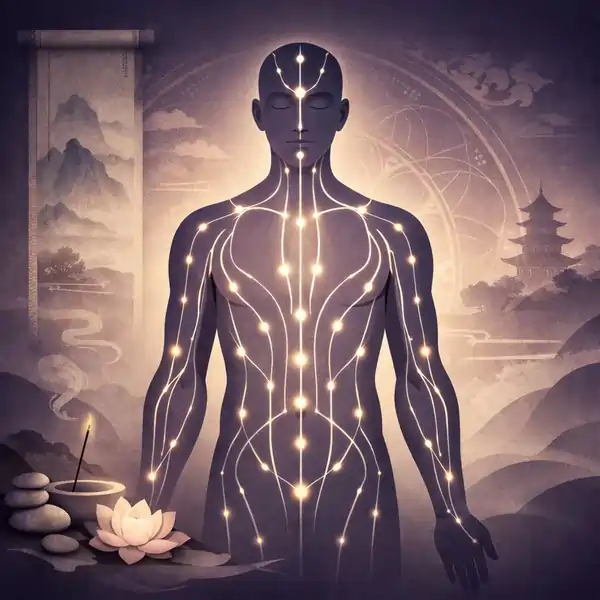
From a traditional perspective, acupressure works by influencing the flow of energy along specific pathways in the body. From a modern understanding, several mechanisms are commonly discussed.
In practice, acupressure may support the body by:
- Stimulating sensory nerves beneath the skin
- Encouraging local blood flow and tissue relaxation
- Supporting the parasympathetic nervous system, which is linked to rest and recovery
- Helping reduce stress-related muscle holding patterns
Research suggests that pressure-based therapies can influence pain perception and relaxation responses. Many people experience acupressure as grounding and calming, particularly when sessions are unhurried and attentive.
What are acupressure points?
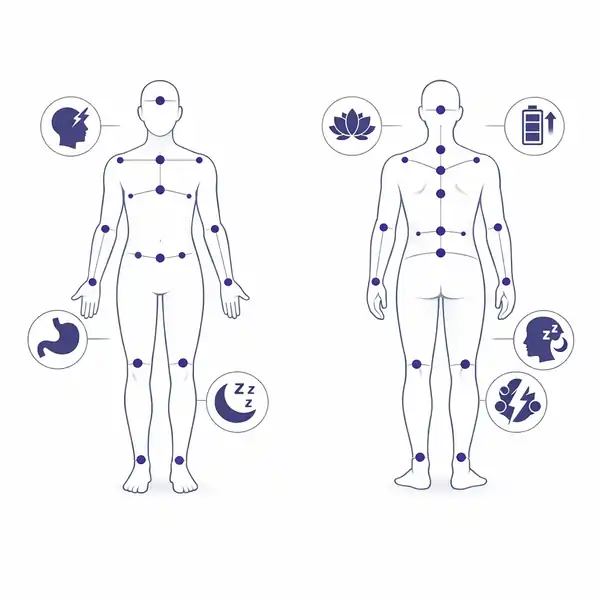
Acupressure points are specific locations on the body that are traditionally associated with particular functions or regions. These points are often found:
- Along muscle planes
- Near joints
- Between tendons
- At areas of natural sensitivity
Each point is selected based on the individual’s needs rather than a one-size approach. For example, points used for neck tension differ from those used for digestive discomfort or stress-related fatigue.
A deeper explanation of point selection and safety considerations is covered in our internal guide on acupressure safety and precautions, which explores how points are chosen responsibly.
What are the commonly observed benefits of acupressure therapy?
Acupressure is often used to support general wellness rather than to treat disease. Commonly observed effects include:
- A sense of relaxation and mental calm
- Temporary relief from muscular tension
- Improved body awareness
- Support for stress management routines
- Enhanced restfulness and sleep quality in some individuals
Many people report that regular sessions help them feel more connected to their physical state, especially when combined with breathing or mindfulness practices. Benefits can be subtle and cumulative rather than immediate or dramatic.
For a detailed breakdown, you may explore our related article on benefits of acupressure therapy, which expands on practical, experience-based observations.
Is acupressure therapy safe?
Acupressure therapy is generally considered safe when performed by a trained practitioner who understands anatomy, pressure modulation, and contraindications.
Safety principles commonly followed include:
- Avoiding excessive force
- Modifying pressure based on sensitivity
- Skipping certain points during pregnancy
- Being cautious with individuals who have bleeding disorders or severe skin conditions
Acupressure is non-invasive and does not involve needles or equipment penetration, which makes it accessible to a wide range of people. Still, it should always be approached as a complementary wellness practice.
Who should avoid or modify acupressure therapy?
Certain individuals should seek professional guidance before undergoing acupressure or may need modifications.
This includes people who:
- Are pregnant, especially in early stages
- Have fractures, open wounds, or active infections
- Have severe osteoporosis
- Are undergoing intensive medical treatments
A qualified practitioner will adjust techniques or recommend postponement when appropriate. Acupressure should never replace medical evaluation or prescribed treatment.
What happens during an acupressure session?
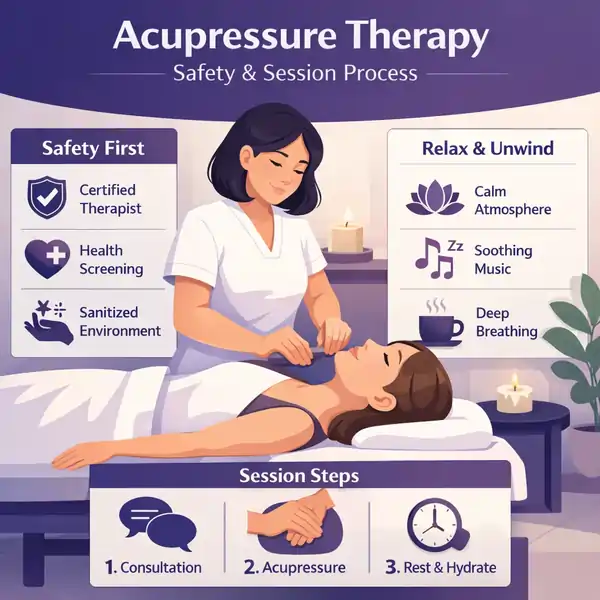
A typical acupressure session begins with a brief conversation to understand comfort levels and general concerns. The client usually remains fully clothed and lies down or sits comfortably.
During the session:
- Pressure is applied gradually to selected points
- The practitioner observes breathing and tissue response
- Sensations may include mild tenderness, warmth, or relaxation
- Silence or guided breathing may be used
Sessions are usually calm and unrushed. Many people feel deeply relaxed by the end, while others feel gently energized.
Acupressure vs acupuncture, what is the difference?
Acupressure and acupuncture are based on the same point system but differ in application.
Acupressure uses manual pressure, making it non-invasive and accessible to those uncomfortable with needles.
Acupuncture uses fine, sterile needles inserted at specific depths.
Both aim to support balance and function. The choice often depends on personal comfort, practitioner recommendation, and individual response.
Myths vs reality about acupressure therapy
Myth: Acupressure works instantly for everyone
Reality: Responses vary. Many people experience gradual or subtle effects over time.
Myth: More pressure means better results
Reality: Gentle, precise pressure is often more effective than forceful application.
Myth: Acupressure can cure medical conditions
Reality: Acupressure is a complementary wellness practice, not a medical treatment.
Aftercare and self-care tips
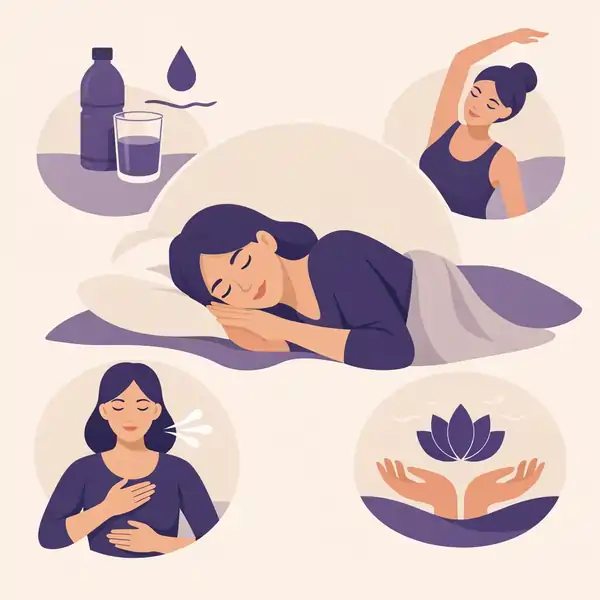
After an acupressure session, people commonly benefit from:
- Drinking water
- Avoiding intense activity for a short period
- Observing bodily responses over the next 24 hours
- Practicing gentle stretching or breathing
Listening to the body is key. Mild soreness can occur but usually resolves quickly.
Final thoughts
Acupressure therapy offers a thoughtful, hands-on way to support relaxation, body awareness, and everyday wellness. Its strength lies in simplicity, skilled touch, and respect for the body’s natural responses.
At Aurapaz, acupressure is offered as part of a personalized, professional wellness approach through safe home sessions, integrating traditional knowledge with modern care principles.
This content is for educational purposes only. Acupressure therapy is a complementary wellness practice and is not a substitute for medical diagnosis or treatment. Always consult a qualified healthcare professional for medical concerns.
Disclaimer:
Experience Aurapaz Wellness
Holistic Cupping, Acupressure, Hijama, Home Service in Hyderabad and Visakhapatnam
www.aurapaz.com
WhatsApp or Call: +91-85000-92131
Book your session: https://aurapaz.com/contact-us


Leave a Reply