

What Is Cupping Therapy? A Clear, Evidence-Informed Guide
Cupping therapy is a traditional bodywork technique that has been practiced across cultures for centuries. Today, it is commonly used as a complementary wellness approach to support circulation, ease muscular tension, and promote relaxation. While its roots are ancient, modern cupping is applied with a clearer understanding of anatomy, safety, and individual needs.
Many people first encounter cupping through images of circular marks on the skin, which often raises questions. What exactly is cupping therapy, how does it work, and is it safe? This guide explains cupping therapy in a clear, grounded way, without exaggerated claims, so you can decide whether it may suit your wellness goals.
Reader expectation: During a cupping session, many people notice a gentle pulling sensation on the skin and a feeling of warmth or release in tight areas, followed by a sense of lightness or relaxation afterward.
On This Page:
- What is cupping therapy?
- Where did cupping therapy originate?
- How does cupping therapy work?
- What are the different types of cupping therapy?
- What does cupping therapy feel like in practice?
- What are the commonly observed benefits of cupping therapy?
- Is cupping therapy safe?
- Who should avoid cupping therapy or use caution?
- Why do cupping marks appear on the skin?
- Myths vs reality about cupping therapy
- Aftercare and precautions following cupping therapy
- Final thoughts on cupping therapy
What is cupping therapy?
Cupping therapy is a technique in which specially designed cups are placed on the skin to create gentle suction. This suction lifts the skin and underlying tissues slightly into the cup. The process is commonly used to encourage localized blood flow, reduce muscular tightness, and support the body’s natural recovery processes.
Unlike massage, which applies pressure downward, cupping works by drawing tissue upward. This different mechanical action is one reason cupping is often used alongside other therapies rather than as a replacement for them.
Cupping therapy is considered a complementary wellness practice. It is not intended to diagnose or treat medical conditions, but rather to support comfort, mobility, and relaxation when applied appropriately.
Where did cupping therapy originate?
Cupping therapy has been used in multiple traditional medical systems, including those from China, the Middle East, Egypt, and parts of Europe. Historical records describe the use of animal horns, bamboo cups, or glass vessels to create suction on the skin.
In traditional Chinese medicine, cupping was often used to support the flow of energy and blood. In Middle Eastern practices, a related form known as Hijama involved specific protocols and timing. Over time, cupping evolved as knowledge of hygiene, anatomy, and safety improved.
Modern cupping therapy integrates this traditional knowledge with current standards of cleanliness and clinical awareness, making it more accessible and consistent in wellness settings today.
How does cupping therapy work?
Cupping therapy works primarily through mechanical and circulatory effects. When suction is applied, several responses are commonly observed:
- Increased local blood flow to the cupped area
- Gentle stretching of muscles and connective tissue
- Stimulation of sensory nerves in the skin
- A relaxation response in the nervous system
By lifting the tissue rather than compressing it, cupping may help areas that feel tight, restricted, or overworked. Many practitioners use cupping on the back, shoulders, legs, or other muscle-dense areas where tension commonly accumulates.
Research suggests that increased circulation and sensory input may play a role in how cupping supports comfort and movement. However, responses vary from person to person, and effects are influenced by overall health, hydration, stress levels, and activity patterns.
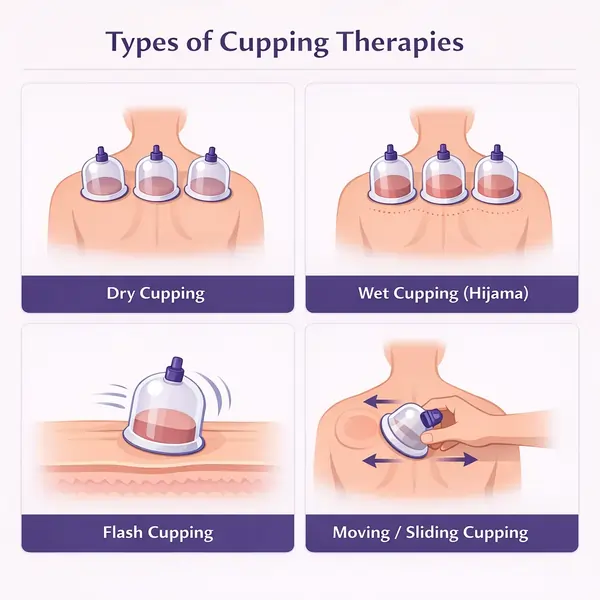
What are the different types of cupping therapy?
There are several forms of cupping therapy, each used for specific purposes. A trained practitioner selects the method based on individual needs and safety considerations.
Dry Cupping
Dry cupping involves placing cups on the skin and creating suction without making any incisions. Cups may remain stationary or be gently moved across the skin using oil. This is the most commonly used form in wellness settings.
Wet Cupping Or Hijama
Wet cupping, also known as Hijama, involves a controlled and hygienic technique where very superficial skin pricks are made before or after suction. This method follows specific protocols and requires additional training and precautions. You can learn more through our internal guide on Hijama therapy and its traditional context.
Moving Or Sliding Cupping
In moving cupping, oil is applied to the skin, and cups are gently glided along muscles. This approach is often used for broader muscle groups and may feel similar to deep tissue massage, but with a lifting effect.
Flash Cupping
Flash cupping involves applying and removing cups quickly in succession. It is sometimes used for sensitive areas or when prolonged suction is not suitable.
What does cupping therapy feel like in practice?
In practice, cupping therapy is usually described as comfortable rather than painful. Most people feel a pulling or stretching sensation as the suction is created. The intensity can be adjusted based on comfort and sensitivity.
Common sensations during or after cupping include:
- Warmth in the treated area
- A feeling of release or looseness
- Mild soreness similar to post-exercise sensations
Communication between the practitioner and the client is important. Suction levels should always be adapted to individual tolerance and health considerations.
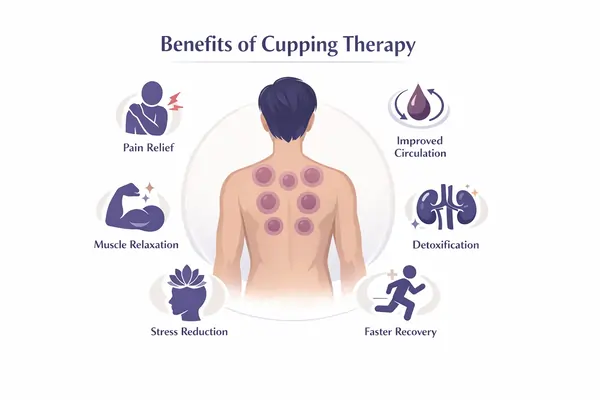
What are the commonly observed benefits of cupping therapy?
Cupping therapy is often used for general wellness support rather than targeted medical treatment. Many people report benefits such as:
- Temporary relief from muscle tightness
- Improved sense of relaxation
- Support for mobility and flexibility
- Enhanced body awareness
In practice, cupping is frequently combined with other approaches such as acupressure therapy for muscle balance or gentle movement practices to support overall results.
It is important to note that responses vary. Cupping may be helpful for some individuals and less noticeable for others. Consistency, lifestyle factors, and practitioner skill all influence outcomes.
Is cupping therapy safe?
When performed by a trained and experienced practitioner, cupping therapy is generally considered safe for most healthy adults. Safety depends on proper technique, clean equipment, appropriate suction levels, and individual screening.
Evidence-informed practice emphasizes:
- Clear communication about comfort levels
- Avoiding sensitive or injured areas
- Using single-use or properly sterilized tools
- Respecting contraindications
Cupping should always be framed as a complementary therapy and not as a replacement for medical care.
Who should avoid cupping therapy or use caution?
Cupping therapy may not be suitable for everyone. Individuals who should avoid or use caution include:
- People with bleeding disorders
- Those taking blood-thinning medications
- Individuals with fragile or damaged skin
- Pregnant individuals, especially on the abdomen or lower back
- People with active infections, wounds, or severe swelling
A professional assessment is important before starting cupping therapy, especially if there is an existing medical condition.
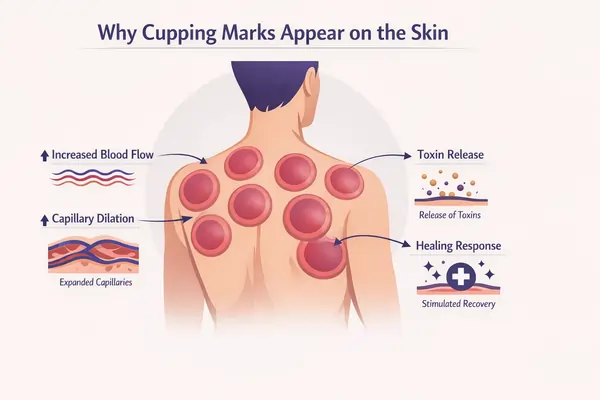
Why do cupping marks appear on the skin?
The circular marks associated with cupping are caused by increased blood flow and capillary response under the skin. These marks are not bruises in the traditional sense and are usually not painful.
Key points about cupping marks:
- Color can range from light pink to deep purple
- Marks typically fade within a few days to a week
- Darker marks may indicate areas of greater stagnation or tension
The presence or intensity of marks does not measure effectiveness. Many people benefit from cupping even when marks are minimal.
Myths vs reality about cupping therapy
Myth: Cupping removes toxins from the body.
Reality: Cupping supports circulation and tissue response, but the body’s detoxification processes are primarily handled by the liver and kidneys.
Myth: Cupping must leave dark marks to work.
Reality: Therapeutic effects can occur with mild or no visible marks.
Myth: Cupping is painful.
Reality: When properly applied, cupping is generally comfortable and adjustable.
Myth: Cupping cures medical conditions.
Reality: Cupping is a complementary practice used for wellness support, not a cure.
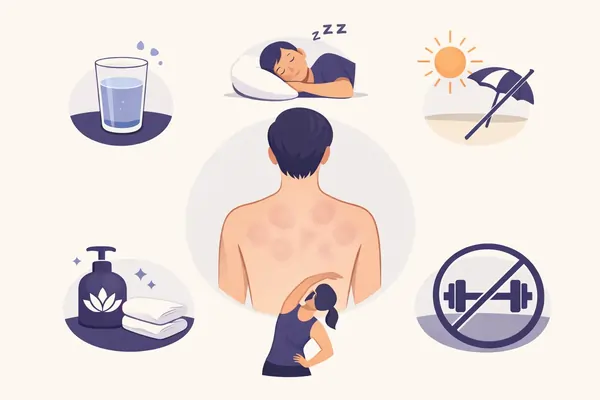
Aftercare and precautions following cupping therapy
After a cupping session, simple aftercare can help support comfort and recovery.
Common aftercare recommendations include:
- Staying hydrated
- Keeping the area warm and covered
- Avoiding intense exercise for several hours
- Observing the skin for any unusual reactions
Mild soreness or fatigue can occur and usually resolves quickly. If discomfort persists, professional guidance should be sought.
Final thoughts on cupping therapy
Cupping therapy is a time-tested practice that continues to be used for its supportive role in relaxation, circulation, and muscular comfort. When approached with proper training, realistic expectations, and safety awareness, it can be a valuable part of a holistic wellness routine.
At Aurapaz, cupping therapy is offered as part of a personalized, professional wellness approach through safe home sessions, always positioned as complementary care rather than medical treatment.
Written by the Aurapaz Wellness Team, guided by decades of hands-on clinical experience.
Disclaimer
This content is for educational purposes only and does not constitute medical advice. Cupping therapy is a complementary wellness practice and should not replace professional medical care. Always consult a qualified healthcare provider regarding any medical concerns.
🌿 Experience Aurapaz Wellness
Holistic Cupping, Acupressure, Hijama, Home Service in Hyderabad and Visakhapatnam
www.aurapaz.com
WhatsApp or Call: +91-85000-92131
Book your session: https://aurapaz.com/contact-us

Leave a Reply