
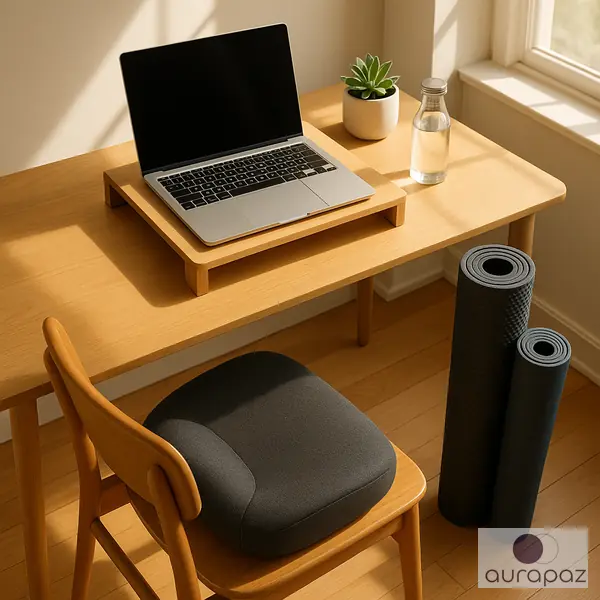
Back Pain From Sitting All Day: What Actually Helps
If you spend most of your workday seated, there is a good chance you already know what back pain from sitting feels like. That familiar ache between your shoulder blades by noon, the tension creeping up your lower spine by 3pm, the instinct to stretch the moment you stand. This is not just stiffness. It is your body sending a very clear signal that something needs to change.
The good news is that back pain from sitting is almost always reversible. In this guide, we walk through exactly why prolonged sitting causes pain, which stretches genuinely help, how your desk setup matters more than you think, and what Ayurvedic and holistic approaches can offer for lasting relief.
Understanding the root cause is the first step. Once you know why sitting creates pain, the solutions start to make real sense.
Table of Contents
Why Sitting All Day Destroys Your Back
When you sit for hours, a chain reaction happens in your body that most people never think about. Your hip flexors, the muscles connecting your spine to your thighs, tighten and shorten. At the same time, your glutes, which are designed to keep your pelvis stable, essentially stop working. Your lower back then compensates, holding tension it was never meant to manage alone.
Prolonged sitting also compresses the intervertebral discs, the cushioning pads that absorb shock between each vertebra. Sitting places roughly 40 per cent more pressure on those discs than standing, and that pressure accumulates over an eight-hour workday. A systematic review and meta-analysis published on the National Institutes of Health confirmed that sedentary behaviour and longer sitting duration are closely linked with chronic low back pain, particularly in desk workers aged 30 and above.
Poor posture amplifies every one of these effects. When you slouch, your centre of gravity shifts forward, pulling your cervical spine out of alignment and straining the muscles along your entire back. The combination of tight hip flexors, inactive glutes, compressed discs, and forward head posture is why back pain from sitting feels so all-encompassing by the end of the working day.
Stretches That Actually Work
Before reaching for pain medication, try these five stretches. Each targets a specific component of sitting-related back pain and takes under two minutes. Consistency matters more than duration here. Five minutes twice a day outperforms one long session on the weekend.
Cat-Cow Stretch
Start on hands and knees. Inhale as you drop your belly and lift your head (Cow). Exhale as you round your spine toward the ceiling (Cat). Repeat 8 to 10 times. This directly counteracts disc compression and helps rehydrate the spinal discs through gentle rhythmic movement.
Child’s Pose
From kneeling, walk your hands forward and let your hips sink back toward your heels. Hold for 30 to 45 seconds. This releases the erector spinae and the thoracolumbar fascia, the thick band of connective tissue that most people feel tighten during prolonged desk work.
Seated Figure-4 Hip Stretch
While seated in a chair, place your right ankle over your left knee. Gently press the right knee down and lean slightly forward. Hold 30 seconds each side. This releases the piriformis muscle, which when tight, can mimic sciatic pain shooting down the leg.
Standing Hip Flexor Lunge
Step one foot forward into a lunge, lower the back knee to the floor, and gently push your hips forward. Hold 30 seconds each side. This directly reverses the hip shortening that drives lumbar strain when you sit for hours without movement breaks.
Thoracic Rotation
Sit sideways on a chair, hold the back of it, and rotate your upper body toward the backrest. Hold for 15 seconds each side. This restores mobility to the mid-back, which often locks up after hours of stillness and transfers excess strain down to the lumbar region.
Fix Your Posture and Desk Setup
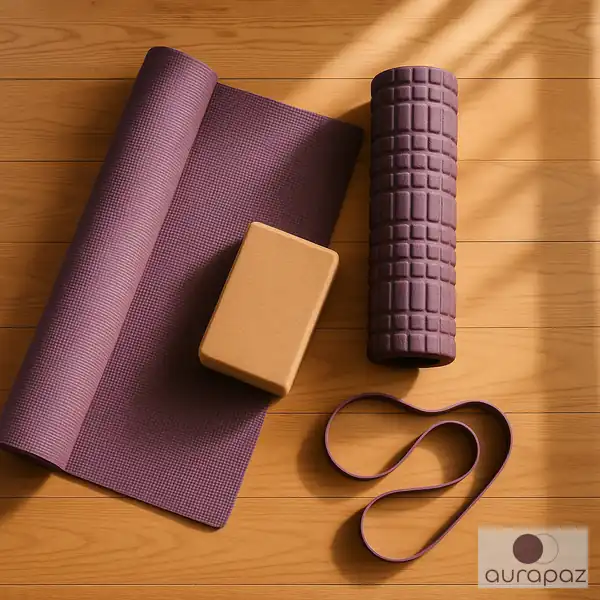
The stretches above will not hold if you return to a poorly set-up workstation. Back pain from sitting is as much an ergonomics problem as a movement one, and most desk setups are quietly working against your spine all day.
Your chair height should allow your feet to rest flat on the floor with your knees at roughly 90 degrees. The backrest should support the natural inward curve of your lumbar spine. If it does not, a lumbar cushion makes more difference than most treatments. Your monitor should sit at eye level, about an arm’s length away. Looking down at a laptop screen for hours adds cumulative load to your cervical spine that gradually travels down to your lower back.
Acupressure offers a helpful complement to ergonomic changes. Regular stimulation of key pressure points along the bladder meridian, which runs parallel to the spine, eases musculoskeletal tension that builds from sustained posture throughout the day. Our guide on acupressure as a natural pain relief method walks through the most effective back-related pressure points in detail.
The single most effective ergonomic change you can make is alternating between sitting and standing every 30 to 45 minutes. A standing desk, a raised counter, or even books stacked under your laptop can break the cycle of sustained compression that drives chronic back pain from sitting.
Ayurvedic and Holistic Remedies
Ayurveda views chronic back pain, especially the type that worsens with cold weather or persistent stress, as a Vata imbalance. Vata governs movement and air in the body, and when it is elevated, the tissues supporting the spine become dry, tight, and less resilient. Warming, nourishing treatments are the Ayurvedic answer.
Warm sesame oil massage, known as Abhyanga, is one of the most effective home remedies in the Ayurvedic toolkit. Gently heating organic sesame oil and massaging it into the lower back before a warm shower calms Vata, reduces stiffness, and nourishes connective tissue. Consistent daily practice brings noticeable relief within two to three weeks. A castor oil compress applied to the lower back for 20 to 30 minutes is another option worth trying. Ricinoleic acid in castor oil carries anti-inflammatory properties that penetrate deeply into muscle tissue.
Internally, turmeric and ginger are both potent anti-inflammatory agents that help reduce the systemic inflammation contributing to chronic musculoskeletal pain. Our guide to anti-inflammatory foods covers the most effective dietary strategies for managing pain from within.
Cupping therapy has gained meaningful research backing for musculoskeletal back pain. The suction created by cups increases local circulation, releases fascial adhesions, and activates the parasympathetic nervous system, all of which ease chronic tension in the back. Learn how cupping therapy improves circulation and relieves tension and whether it suits your pattern of pain.
Build Movement Into Your Day
The real long-term solution to back pain from sitting is not just treating the pain. It is changing the conditions that create it. No stretch or remedy will hold if you spend eight hours a day loading your spine without relief.
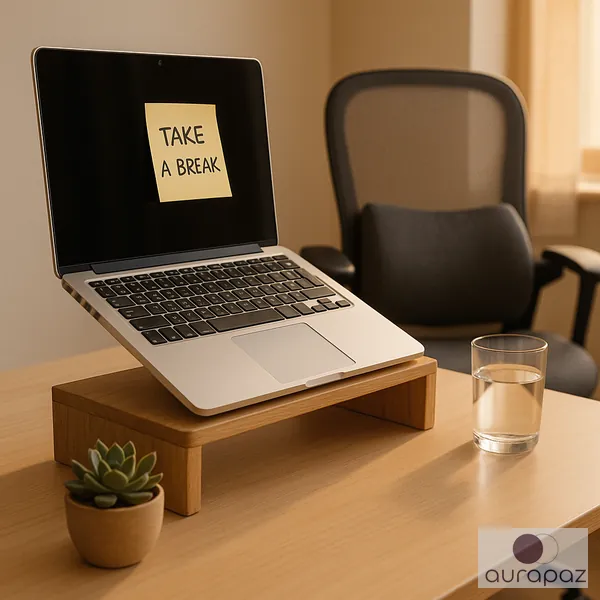
The 30-minute rule is simple and evidence-backed: stand up and move for at least two minutes every 30 minutes of sitting. Set a phone alarm, use a smartwatch reminder, or keep a refillable glass of water at your desk that forces you to stand and walk to the kitchen regularly. These micro-breaks prevent the cumulative disc compression and muscle deactivation that build into chronic pain over weeks and months.
Strengthening the posterior chain, your glutes, hamstrings, and spinal erectors, is equally important for long-term spine health. Three sets of glute bridges daily and a 15-minute walk after work are enough to meaningfully reduce back pain from sitting over four to six weeks. You do not need a gym membership or a structured programme to start seeing results.
Pay attention to how your body feels throughout the day, not just when pain peaks. Low-grade tightness at 11am is your cue to stand and stretch. Responding early keeps the pain signal from escalating into something that disrupts your evening or your sleep. Back pain from sitting is manageable, and for most people it is entirely preventable once they understand what their body actually needs.

Useful Links
• What Is Acupressure Therapy? (Aurapaz)
• What Is Cupping Therapy? (Aurapaz)
• Anti-Inflammatory Foods: Complete Guide (Aurapaz)
• Why Am I Always Tired? Chronic Fatigue Causes (Aurapaz)
• Sedentary Behaviour and Low Back Pain: Systematic Review (NIH/PMC)
• Lower Back Pain: What Causes It? (Mayo Clinic)
• Seated Postures and Immediate Back Pain Increases: Systematic Review (PubMed)
DISCLAIMER
This content is for educational purposes only and does not constitute medical advice. Always consult a qualified healthcare provider regarding any medical concerns.
Experience Aurapaz Wellness
Holistic Cupping, Acupressure, Hijama, Indian Ancient Therapy Service in Hyderabad and Visakhapatnam
www.aurapaz.com
WhatsApp or Call: +91-85000-92131
Book your session: https://aurapaz.com/contact-us
Contact Us
Ready to transform your health through personalised nutrition? Book a one-on-one consultation.
Book your consultation today
Website: www.aurapaz.com


Leave a Reply