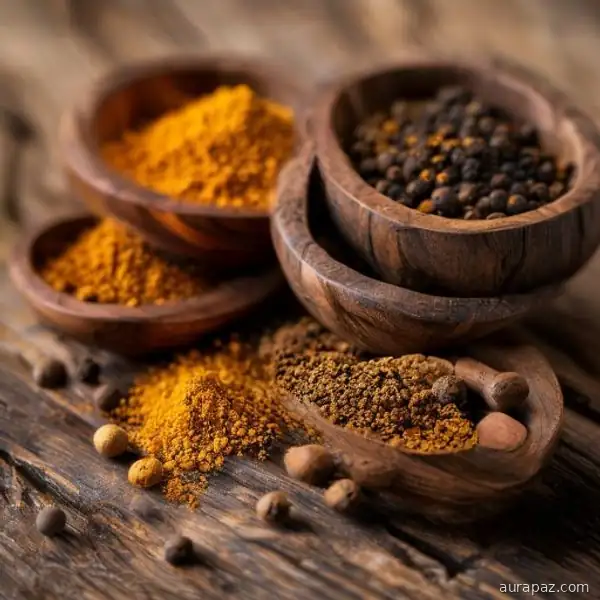
Turmeric has earned its place as one of the most researched spices in modern nutrition science. Its active compound, curcumin, has been studied for its powerful anti-inflammatory and antioxidant properties. Yet for most people eating turmeric on its own, very little of that curcumin actually enters the bloodstream.
The reason comes down to biology. Curcumin is poorly absorbed on its own: it passes through the digestive system largely intact before the body has a chance to use it. That is where black pepper enters the picture. A compound in black pepper called piperine transforms curcumin’s journey through your body completely, increasing its absorption by up to 2000%.
In this guide you will learn exactly how that process works, why the combination matters for your health, how to use both spices daily without overthinking it, and what to watch out for. Whether you are adding them to food or taking a supplement, this will help you get the most from every dose.
What Is Curcumin and Why Does Absorption Matter?
Curcumin is the compound that gives turmeric its deep golden colour. It belongs to a group of molecules called curcuminoids, and it accounts for roughly 2, 5% of turmeric by weight. Research published in journals like Nutrients and the Journal of Medicinal Food has associated curcumin with reduced inflammatory markers, improved joint health, better antioxidant activity, and support for brain function.
The problem is bioavailability. After you eat turmeric, curcumin has to survive your stomach acid, get absorbed through your intestinal wall, and reach your cells before it can do anything useful. On its own, it struggles at almost every one of those steps. It is poorly soluble in water, metabolised quickly in the liver, and eliminated before significant amounts reach systemic circulation.
This is why people who eat plenty of turmeric in their diet often see modest effects at best. The spice is wonderful and worth eating regularly, but without something to enhance absorption, most of the curcumin is wasted. That is the gap black pepper fills so elegantly.
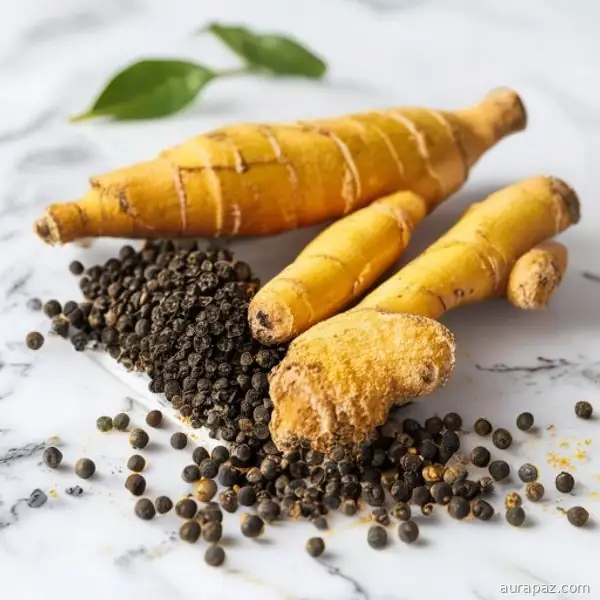
How Piperine in Black Pepper Boosts Curcumin
Piperine is the alkaloid that gives black pepper its sharp, pungent heat. It is the same compound responsible for the sneeze reflex when you inhale freshly ground pepper. But beyond that familiar bite, piperine has a remarkable effect on how your body processes other compounds, including curcumin.
A landmark 1998 study by Shoba et al., published in Planta Medica, found that consuming 20mg of piperine alongside curcumin increased curcumin bioavailability by 2000% in humans. The effect was measured over a 45-minute window and was consistent across subjects. That figure ( 2000% ) has become one of the most cited statistics in nutritional biochemistry.
Piperine works through two main mechanisms. First, it inhibits enzymes in the intestinal wall and liver that would normally break down curcumin before it reaches the bloodstream. This process, called first-pass metabolism, is what makes so many natural compounds ineffective at low doses. Piperine slows that process down long enough for curcumin to get through.
Second, piperine slightly slows gastric emptying: the rate at which food moves out of your stomach. This gives your intestines more time to absorb the curcumin before it passes further along the digestive tract. Think of it as extending the window of opportunity for absorption at the site where it matters most.
Key Health Benefits of the Combination
When curcumin is actually absorbed, the research on what it does becomes much more meaningful. Here is what the evidence points to when turmeric and black pepper are consumed together regularly.
Reduced Chronic Inflammation
Curcumin inhibits NF-kB, a molecule that switches on genes related to inflammation. Chronic, low-grade inflammation sits at the root of conditions like heart disease, type 2 diabetes, and certain cancers. Eating an anti-inflammatory diet built around whole foods and key spices like turmeric is one of the most evidence-backed dietary strategies for long-term health.
Joint Comfort and Mobility
Several small trials have found that curcumin supplementation reduces pain and stiffness in people with osteoarthritis, sometimes matching the effect of ibuprofen without the gastrointestinal side effects. This is one of the most practically relevant benefits for people over 40 or anyone with an active lifestyle.
Antioxidant Protection
Curcumin neutralises free radicals directly and also stimulates your body’s own antioxidant enzymes. This dual action makes it more powerful than simply consuming an antioxidant-rich food, because it boosts your internal defence systems at the same time.
Brain and Mood Support
Research has shown that curcumin can increase levels of brain-derived neurotrophic factor (BDNF), a protein linked to memory, learning, and mood regulation. Some studies also suggest it may help lower cortisol levels over time, which connects it to stress management. If you are interested in natural approaches to cortisol and stress, the relationship between chronic stress and skin ageing is worth understanding alongside this.
Gut Health
Turmeric has traditionally been used to soothe digestive complaints. Modern research suggests curcumin may support a balanced gut microbiome and reduce intestinal permeability. For a deeper look at the gut-health picture, healing your gut naturally covers the full range of dietary and lifestyle strategies.

How to Use Turmeric and Black Pepper Every Day
The good news is that you do not need a large amount of either spice to get the benefit. Even a pinch of black pepper alongside turmeric is enough to trigger the absorption effect. Here are the most practical ways to make this pairing a daily habit.
Golden Milk
Warm a cup of milk (dairy or plant-based) with half a teaspoon of turmeric, a pinch of black pepper, a small knob of fresh ginger, and a little honey or coconut sugar. This is the most traditional preparation and remains one of the most pleasant ways to consume both spices together. Adding a fat source like coconut milk or whole dairy also helps, since curcumin is fat-soluble.
Curries and Dals
Almost any South Asian curry or dal recipe already includes both turmeric and black pepper. If yours does not, a simple addition of freshly ground black pepper at the end of cooking covers the absorption base. This is genuinely one of the reasons traditional Indian cooking has such a strong nutritional logic, these pairings were understood intuitively long before the biochemistry was studied.
Scrambled Eggs or Roasted Vegetables
A quarter teaspoon of turmeric stirred into scrambled eggs with black pepper is barely detectable in flavour but turns an ordinary breakfast into a curcumin-rich meal. The same approach works beautifully with roasted cauliflower, sweet potato, or chickpeas, just toss with olive oil, turmeric, pepper, and salt before roasting.
Supplements
If you take a curcumin supplement, always check that it contains piperine (sometimes listed as BioPerine on labels). Without it, most of the curcumin in the capsule will be excreted. A standard effective dose is 500 (1000mg of curcumin with 5) 20mg of piperine, taken with a meal that contains some fat.

Common Myths About Turmeric Absorption
Myth: More turmeric always means more benefit
The amount of turmeric you eat matters far less than how well your body absorbs the curcumin in it. A small amount of turmeric taken with black pepper and a fat source will deliver significantly more curcumin to your bloodstream than a large amount eaten without either.
Myth: Cooking destroys curcumin
Curcumin is relatively heat-stable at normal cooking temperatures. You will not lose meaningful amounts by sauteing or simmering turmeric. Extremely prolonged high-heat cooking may degrade some of it, but standard curry preparation at home is not a concern.
Myth: Any black pepper supplement works equally well
Whole or freshly ground black pepper contains more active piperine than many pre-ground commercial products, which can lose potency over time. If using a supplement, look for standardised piperine extract rather than assuming a generic ‘black pepper extract’ has consistent potency.
Who Should Be Careful
For most healthy adults, turmeric and black pepper in culinary amounts are completely safe. However, there are a few situations where caution or a conversation with your doctor makes sense.
- Blood-thinning medication: Both curcumin and piperine have mild anticoagulant properties. If you are taking warfarin, aspirin, or other blood thinners, high-dose curcumin supplements may interact.
- Gallstones or bile duct problems: Turmeric stimulates bile production. This is usually beneficial for digestion, but in people with gallstones or a blocked bile duct it can cause discomfort.
- Iron absorption: Curcumin can bind to iron and reduce its absorption. People with iron-deficiency anaemia should avoid taking turmeric supplements at the same time as iron-rich meals.
- Pregnancy: Culinary use is fine, but high-dose curcumin supplements have not been studied in pregnancy and should generally be avoided.
None of these cautions apply to the amounts you would typically use in cooking. They are relevant primarily when taking concentrated supplements, where the dose is many times higher than what you would consume in a normal meal.
References & Further Reading
• The most powerful anti-inflammatory foods
• Ashwagandha benefits for stress and anxiety
• How to heal your gut naturally
• Shoba et al. (1998): Piperine and curcumin bioavailability (PubMed)
• Why black pepper boosts turmeric absorption, Healthline