
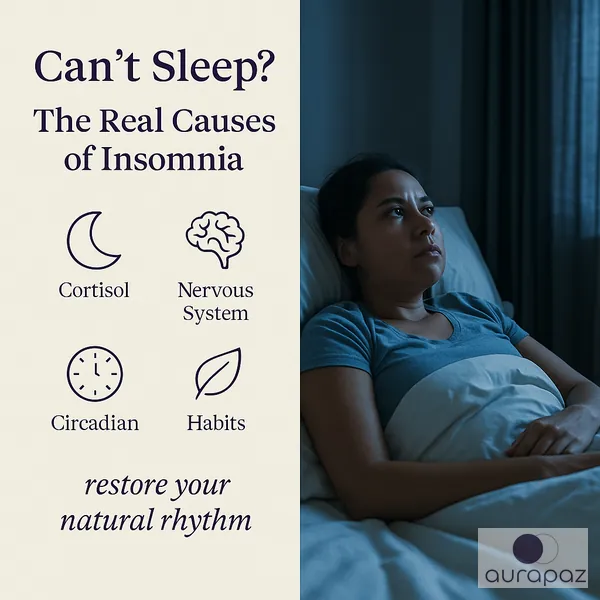
Can’t Fall Asleep? The Real Causes of Insomnia
You are exhausted but wired, staring at the ceiling at 2 a.m., watching the clock tick toward morning. If this happens once in a while, it is annoying. If it happens night after night, you are dealing with insomnia, and the real causes of insomnia run far deeper than caffeine or a busy mind.
Roughly one in three adults across India and the United States experience disrupted sleep, and around ten percent meet the clinical definition of chronic insomnia. The cost is not only fatigue. Sleep loss is linked to weakened immunity, hormone imbalance, weight gain, anxiety, and accelerated aging.
This guide explains what insomnia really is, the hormonal and neurological reasons your brain refuses to power down, and what genuinely works to restore deep, restorative rest.
Table of Contents
What Insomnia Actually Is
Insomnia is not just trouble falling asleep. Clinically, it is difficulty initiating sleep, staying asleep, or waking too early, at least three nights a week for three months or longer, paired with daytime impact like fatigue, brain fog, or low mood.
There are two forms. Acute insomnia is short-term, triggered by stress, jet lag, or a life event, and usually resolves on its own. Chronic insomnia is persistent and rarely caused by one thing. It is a layered mix of hormonal disruption, nervous system overactivation, lifestyle, and sometimes an undiagnosed medical issue.
Many people are “maintenance” insomniacs. Falling asleep is easy, but they wake at 2 or 3 a.m. and cannot drift back. That pattern often points to cortisol or blood sugar imbalance rather than anxiety, and the fix is very different.

Why Your Brain Will Not Switch Off at Night
Sleep is not the absence of wakefulness. It is an active neurological process, a handover between your sympathetic nervous system, which keeps you alert, and your parasympathetic system, which lets you rest and digest.
When you are stuck in chronic stress, the sympathetic side stays dominant well into the night. Adrenaline and cortisol remain elevated, your heart rate is slightly raised, and the mind keeps generating thoughts because the brain is interpreting the body as being in a state of mild threat.
The default mode network, the brain region active during mind-wandering, also becomes hyperactive in insomnia. That is why your most anxious thoughts appear precisely when you most want quiet. Research in the journal Sleep shows chronic insomniacs display measurable hyperarousal even during deep sleep.
The Hormones Behind Healthy Sleep
Melatonin is the sleep-onset signal. Your pineal gland releases it as darkness falls, peaking around 2 to 4 a.m. Bright light at night, especially blue light from screens, can suppress melatonin production by up to 50 percent according to Harvard Medical School research.
Cortisol is the wake hormone, lowest near midnight, highest just before you rise. Under chronic stress this curve flattens or reverses, leaving you wired at night and exhausted in the morning. Elevated nighttime cortisol explains many of the real causes of chronic fatigue and the classic 3 a.m. wake-up.
Adenosine is sleep pressure itself, building the longer you stay awake. Caffeine blocks adenosine receptors. A coffee at 4 p.m. can still occupy receptors at midnight.

Daily Habits That Quietly Wreck Your Sleep
Most chronic sleep loss is not caused by one big problem. It is the slow accumulation of small daily choices that desynchronise your body clock. The most common disruptors:
- Bright overhead light or screens within two hours of bedtime
- Late-afternoon caffeine, including in chocolate and matcha
- Irregular sleep and wake times across weekdays and weekends
- A large meal within three hours of sleeping
- Doom-scrolling in bed, training the brain to associate the bed with stimulation
- Alcohol as a sleep aid, which knocks you out but fragments REM sleep
- A warm bedroom, since the body needs to drop about one degree to enter deep sleep
Most people only need to fix two or three of these habits to see clear improvement within ten days. The aim is consistency rather than perfection. Your body craves rhythm more than rules.
What Actually Restores Deep Sleep
Insomnia responds better to behaviour and environment changes than to medication for most people. Cognitive Behavioural Therapy for Insomnia (CBT-I) is now the first-line treatment recommended by the American College of Physicians, outperforming sleeping pills in long-term studies.
Western foundations that consistently work:
- A fixed wake time every day, including weekends, even after a bad night
- Morning sunlight on the eyes within 30 minutes of waking
- A caffeine cut-off by 1 p.m.
- A cool, dark, quiet bedroom around 18°C / 65°F
- A wind-down ritual of 60 to 90 minutes with dim light and no screens
Ayurvedic and TCM rituals layer beautifully on top:
- Warm sesame oil massaged into the feet and scalp before bed to settle a busy Vata mind
- A small mug of warm milk with a pinch of nutmeg or cardamom about 30 minutes before sleep
- Acupressure at HT-7, called Shen Men, on the inside of the wrist crease, held for one to two minutes
- A teaspoon of ashwagandha powder in warm milk in the evening, building on the documented evidence for ashwagandha’s effects on stress and sleep

Myths vs Facts About Insomnia
❌ Myth: You need a full eight hours every night or your health will suffer.
✅ Fact: Adult sleep need ranges from six to nine hours depending on genetics and age. Quality and consistency matter more than the exact number.
❌ Myth: Alcohol helps you sleep better.
✅ Fact: Alcohol shortens the time to fall asleep but suppresses REM sleep and causes more wake-ups in the second half of the night.
❌ Myth: Staying in bed will eventually let you fall asleep.
✅ Fact: Lying awake for more than 20 minutes trains the brain to associate bed with frustration. Get up, sit in dim light, and return only when sleepy.
❌ Myth: Melatonin supplements are always safe to take long-term.
✅ Fact: Most clinical evidence supports short-term use only. High daily doses can flatten your natural melatonin response over time.
Conclusion
Insomnia is rarely a single problem. It is the predictable result of a nervous system stuck in high alert, hormones that are no longer in rhythm, and habits that pull the body out of its natural sleep window. Once you see that pattern, the path back to restful sleep becomes practical rather than mysterious.
Start with three things this week. A fixed wake time, morning sunlight within 30 minutes of waking, and screens off 60 minutes before bed. These habits reset more circadian damage than any supplement. Add Ayurvedic and TCM rituals as soothing companions, and let your body relearn its rhythm.
If sleep does not improve within four weeks, that is a signal to investigate deeper issues such as thyroid, perimenopause, anxiety, or sleep apnoea. Insomnia is almost always treatable without medication. The aim is to remove the obstacles your body is trying to overcome.
Useful Links
• Why Am I Always Tired? The Real Causes of Chronic Fatigue
• Ashwagandha Benefits for Stress and Anxiety
• NHLBI – What Is Insomnia?
• CDC – About Sleep and Sleep Disorders
DISCLAIMER
This content is for educational purposes only and does not constitute medical advice. If you are experiencing severe or persistent insomnia, please consult a qualified healthcare provider, sleep specialist, or your physician before making changes to medication or starting new herbal protocols.
Contact Us
Ready to transform your sleep and energy through personalised nutrition and lifestyle support? Book a one-on-one consultation.
Book your consultation today
Website: www.aurapaz.com



Leave a Reply