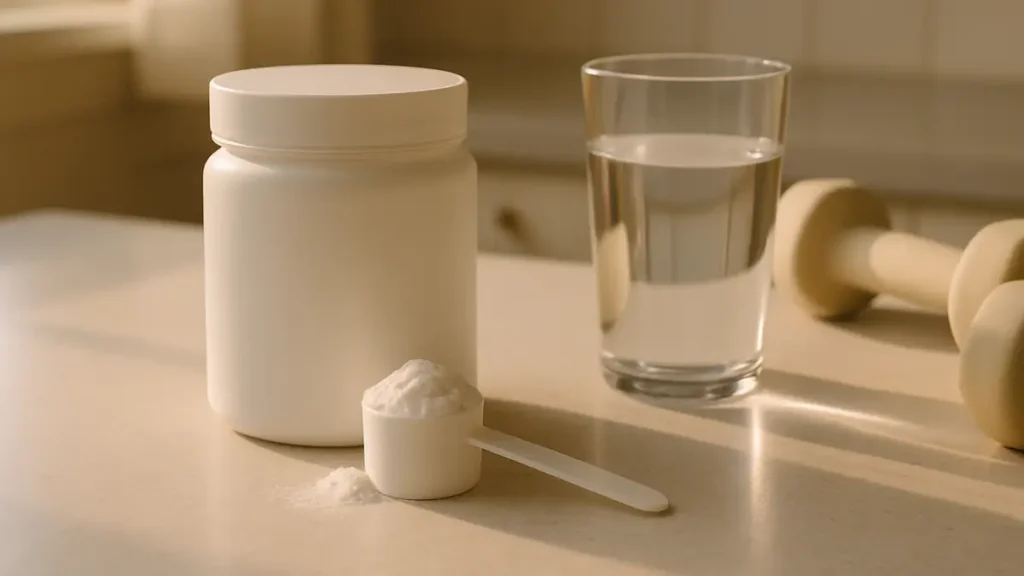
For thirty years creatine sat in the corner of the supplement shop marked “for men who lift heavy things”. Now it is all over your feed, recommended for women in their forties and fifties, for brain fog, for menopause, for bone health. If you grew up being told creatine was something between a protein shake and a steroid, that shift is confusing at best and alarming at worst. So let me be direct about this one, because it is unusual. Creatine is among the most studied supplements in existence, its safety record is genuinely strong, and most of what women have been told about it is simply wrong. That said, the current wave of enthusiasm is also running ahead of the evidence in places. Here is the honest version.
Why Creatine Suddenly Became a Women’s Supplement
Creatine is not new and it is not a fad ingredient someone invented last year. It has been researched since the early 1990s, with hundreds of trials behind it. What changed is who the research is now being done on.
For decades, creatine studies were run almost exclusively on young male athletes, so the advice that filtered out was aimed at young male athletes. In the last few years researchers have finally turned to women, and specifically to women in midlife, and found effects that have nothing to do with sport: muscle preservation, bone support, and some intriguing early signals around the brain. Combine that with a much louder public conversation about menopause, and you have the reason creatine is suddenly everywhere.
What Creatine Actually Is
This is the part that clears up half the confusion. Creatine is not a hormone, not a steroid, and not a stimulant. It is a compound your body already makes in your liver and kidneys, and which you also eat in small amounts in meat and fish.
Its job is energy. Your muscles store creatine as phosphocreatine, which helps rapidly regenerate ATP, the molecule your cells use for short bursts of hard effort. Supplementing simply tops up those stores so the tank is fuller. Your brain uses creatine for energy too, which is exactly why the cognitive research exists.
Two points matter for women in particular. First, women carry substantially lower total creatine stores than men, with reviews putting the gap at around seventy to eighty percent. That sounds dramatic, and it largely reflects differences in total muscle mass rather than anything wrong with your muscles. Second, vegetarians and vegans start with noticeably lower stores, because the dietary sources are meat and fish. In India, where a large share of the population eats little or no meat, that is not a footnote. It may be the single biggest reason a woman here would notice a difference.

Creatine for Women: Myth vs Reality
Few supplements carry as much outdated baggage. Here is how the common claims compare with the evidence.
| What the trend says | What the science says |
|---|---|
| Creatine will make you bulky and masculine | It does not. Women lack the testosterone levels required for that, and creatine is not a hormone. It supports lean muscle and strength, not bulk |
| It damages your kidneys | In healthy people, decades of research including long term studies show no kidney or liver harm at normal doses. It can slightly raise creatinine on a blood test, which is a measurement artefact, not damage |
| It is basically a steroid | It is not remotely a steroid. It is a naturally occurring compound your own body makes daily and you eat in meat and fish |
| It makes you gain weight and look puffy | Any early gain is a small amount of water drawn into the muscle itself, not under the skin. It is usually one to two kilograms at most, and often not noticeable |
| You must “load” with big doses first | Loading just fills your stores faster. Taking three to five grams daily reaches the same place in three to four weeks, with less stomach upset |
| It will fix your energy and brain fog on its own | This is where the hype overreaches. The brain evidence is early and modest, and creatine cannot compensate for poor sleep, low iron or an inadequate diet |
What the Evidence Shows: Muscle, Strength and Bone
This is the best established part, and it comes with an important condition attached.
It works with training, not instead of it
Creatine is not a supplement that does something to you while you sit still. It lets you squeeze out an extra repetition or lift slightly heavier, and it is that accumulated extra training that produces the result. Take creatine and do nothing, and you should expect close to nothing. This is the single most important practical point in this article.
Why midlife changes the picture
From around the age of thirty, we gradually lose muscle mass, and that loss accelerates around menopause as oestrogen falls. Less muscle means a slower metabolism, weaker bones, poorer blood sugar control and a higher risk of falls later on. Combining resistance training with creatine appears to help preserve muscle and strength during exactly this window, which is why the interest in perimenopausal and postmenopausal women is genuine rather than manufactured. It sits alongside the other changes worth attending to in this decade, including the shifts in heart health during perimenopause.
Bone: the part that is oversold
Bone density is where the online enthusiasm runs furthest ahead of the evidence, so let me be blunt. Creatine on its own does nothing measurable for your bones. Combined with resistance training, a few studies in postmenopausal women have suggested a slowing of bone loss at the hip, but reviews of the wider literature do not yet support a reliable bone benefit. If protecting your bones is the goal, the weight training itself, along with adequate calcium, vitamin D and protein, is doing the real work. Creatine is at best a small assist.
Creatine is not an alternative to lifting weights and eating enough protein. It is a small multiplier on work you are already doing.
It does not replace protein
Worth saying plainly, because people conflate the two. Creatine is an energy compound, protein is a building material. If your protein intake is low, fix that first. Adding creatine to a diet short on protein is like buying better tyres for a car with no fuel.
The Brain Angle: Promising, Not Proven
This is the part driving most of the viral interest, so it deserves careful handling.
Because your brain also runs on creatine, researchers have asked whether topping up stores affects thinking. The early results are interesting. Benefits show up most clearly when the brain is under stress, for example during sleep deprivation, where creatine has improved measures of cognitive performance. A 2026 randomised trial in perimenopausal and menopausal women, known as CONCRET-MENOPA, found that eight weeks of supplementation improved reaction time by around six and a half percent, against just over one percent on placebo, alongside a sixteen percent rise in frontal brain creatine compared with under one percent on placebo.
Now the caveats, because they matter, and one of them is awkward for the advice I give below. That trial included just thirty six women, and it used creatine hydrochloride at fairly low doses rather than the monohydrate I recommend. So it is an encouraging signal rather than proof that your daily monohydrate will sharpen your thinking. These studies are generally small, short, and use different measures. Creatine is not a treatment for brain fog, and it is certainly not a treatment for dementia. If you are exhausted and struggling to concentrate, the far more likely culprits are sleep, stress, thyroid function, or low iron or B12, all of which are worth investigating before reaching for a tub of powder. We cover this in more depth in our guide to the real causes of persistent fatigue.
Is It Safe? The Kidney Question
This is the fear I hear most often, so here is a straight answer. In healthy people, creatine monohydrate has one of the strongest safety records of any supplement on the market. Long term studies, including trials running for years, have not found harm to kidney or liver function at standard doses, and reviews looking specifically at women have reached the same conclusion.
The kidney myth has a specific and understandable origin. Creatine breaks down into a waste product called creatinine, and creatinine is what doctors measure to estimate kidney function. Supplementing can nudge that number up slightly, which looks alarming on a report. It reflects the extra creatine in your system, not damaged kidneys. If you take creatine, mention it before a blood test so your result is interpreted correctly.
How to Take It, Without Overcomplicating It
The supplement industry has made this needlessly complicated, so here is the simple version.
- Form: creatine monohydrate. That is it. It is the most researched and the cheapest, and the premium forms (HCL, buffered, liquid) have never been shown to beat it. Look for a plain product with no proprietary blends.
- Dose: three to five grams a day, every day. Smaller women may do perfectly well at three grams.
- Loading: unnecessary for most people. Skip it and you will reach full stores in about a month with less bloating.
- Timing: genuinely does not matter much. Consistency matters far more than whether you take it before or after training.
- Rest days: keep taking it. You are maintaining a store, not fuelling a single session.
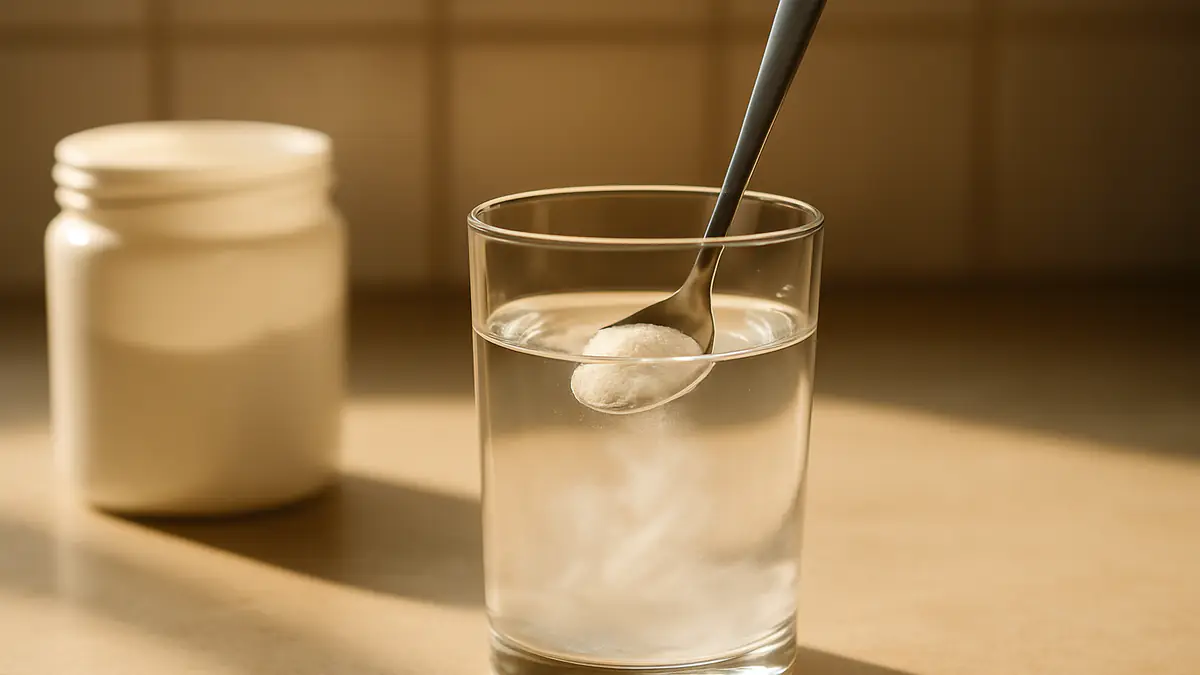
- With what: stir into water, juice, milk or your morning coffee. It does not need to be anything special.
Give it four to six weeks before judging. And if your stomach objects, split the dose or take it with food rather than abandoning it.
The sensible summary
- Creatine is not a steroid, not a hormone, and will not make you bulky.
- It is safe for healthy adults at three to five grams a day, with strong long term data.
- It only works properly if you are also doing some resistance training.
- Vegetarians tend to start with lower stores, so may notice more.
- Buy plain creatine monohydrate. Ignore the expensive variants.
- Sort out sleep, protein and iron first. Creatine is the finishing touch, not the foundation.
The Bottom Line
Creatine is one of the rare cases where a supplement getting attention online genuinely deserves some of it. The old fears about bulk, kidneys and steroids do not survive contact with the evidence, and for women in midlife who are strength training, the case is reasonable and getting stronger. Where the internet overreaches is in selling it as a fix for tiredness, focus and ageing itself. It is not that. It is a cheap, well studied, modest helper that works only when the basics are already in place. If you are lifting weights, eating enough protein and sleeping properly, creatine is a sensible addition. If you are not, start there instead, and consider whether something like magnesium or your overall diet is the more useful conversation.
If you are unsure whether creatine fits your situation, particularly around menopause or on a vegetarian diet, that is worth talking through properly rather than guessing from a reel.
Wondering whether creatine is right for you? Message Anusha on WhatsAppReferences & Further Reading
- Kreider RB et al., “International Society of Sports Nutrition position stand: safety and efficacy of creatine supplementation in exercise, sport, and medicine”: Journal of the International Society of Sports Nutrition
- Antonio J et al., “Common questions and misconceptions about creatine supplementation: what does the scientific evidence really show?”: Journal of the International Society of Sports Nutrition (2021)
- Smith-Ryan AE, Cabre HE, Eckerson JM, Candow DG, “Creatine Supplementation in Women’s Health: A Lifespan Perspective”, Nutrients (2021): Nutrients
- “The Effects of 8-Week Creatine Hydrochloride and Creatine Ethyl Ester Supplementation on Cognition, Clinical Outcomes, and Brain Creatine Levels in Perimenopausal and Menopausal Women (CONCRET-MENOPA)”, Journal of the American Nutrition Association (2026): PubMed (PMID 40854087)
- “Creatine for women: should you add this supplement into your diet?”: The Conversation