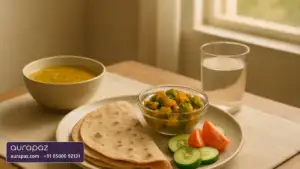
Protein advice reaches Indian families in two loud versions. One says we are all badly short of it, vegetarian women most of all, and that a tub of powder is the answer. The other, from gym culture and now the new American guidelines, says most adults should eat nearly double what we were once told. For most people the useful answer sits between the two, and it starts with a number worked out for Indian bodies and Indian diets.
This guide covers how much an adult needs, when that number goes up, what a serving of dal or paneer actually gives you, and who should be careful before eating more. Children have different figures, which I set out in protein for children.
How much protein does an adult actually need?
The ICMR National Institute of Nutrition (ICMR-NIN) sets India’s nutrient requirements. In its 2020 revision, the Recommended Dietary Allowance (RDA) for healthy adults is 0.83 g of protein per kg of body weight a day, for men and women alike. The typical person needs less, about 0.66 g per kg (the Estimated Average Requirement); the RDA is pitched higher on purpose so that it covers nearly everyone.
For the institute’s reference adults, that works out at 54 g a day for a 65 kg man and 45.7 g a day for a 55 kg woman. It follows the 2007 WHO, FAO and UNU expert report, whose safe level is the same 0.83 g per kg, and replaced India’s 2010 figure of 1 g per kg.
One footnote matters: for people whose diet is mostly cereal, with little dal, milk, eggs or other good quality protein, ICMR-NIN keeps the requirement at 1 g per kg.
Doing the sum for yourself
Multiply your weight in kilograms by 0.83. At 60 kg that is about 50 g a day; at 70 kg, about 58 g. That is a daily total, and landing a little under on one day is not a deficiency. If you are carrying a lot of extra weight, a dietitian can help you decide which weight to use.
Why other numbers look so much higher
In January 2026, the new Dietary Guidelines for Americans moved their adult target to 1.2 to 1.6 g per kg and advised a protein food at every meal. I went through what changed in my piece on the US dietary guidelines for 2025 to 2030. Indian advice has not moved with it.
ICMR-NIN’s own reading of Indian diets is more nuanced than “everyone is short”. Its 2024 Dietary Guidelines for Indians note that an adult’s daily diet often provides 60 to 70 g of protein, more than the requirement, and that the real challenge is quality. Cereals supply 50 to 70 per cent of daily energy in Indian diets, while pulses, meat, poultry and fish together supply only 6 to 9 per cent, against a recommended 14 per cent. Many of us eat enough grams, but too many come from rice and wheat alone.

When you need more than the allowance
After 65
Ageing muscle responds less strongly to protein, and illness raises needs further. The PROT-AGE study group recommends that people over 65 eat at least 1.0 to 1.2 g per kg a day, at least 1.2 g per kg if they are exercising or otherwise active, and 1.2 to 1.5 g per kg for most older adults with an acute or chronic illness. The European Society for Clinical Nutrition and Metabolism (ESPEN) gives the same ranges for healthy and for ill or malnourished older people.
Both groups pair protein with regular exercise. PROT-AGE makes one exception: older people with severe kidney disease who are not on dialysis may need to limit protein, so their target belongs with their doctor.
For a 60 kg grandmother, 1.0 to 1.2 g per kg is 60 to 72 g a day. ICMR-NIN’s suggested balanced diets for older adults land close to this: about 56 g of protein a day for a 55 kg woman and about 62 g for a 65 kg man. Smaller appetites are the practical hurdle, so soft foods such as dal, curd, paneer, eggs and fish help; unplanned weight loss or weakness needs a doctor.
If you train
The International Society of Sports Nutrition (ISSN) considers 1.4 to 2.0 g per kg a day sufficient for most people who exercise, for building and maintaining muscle. A 2018 meta-analysis of 49 trials found that extra protein gave modest gains in strength and muscle during resistance training, but none in lean mass beyond about 1.6 g per kg a day. ICMR-NIN quotes the same ceiling and adds that protein will not build muscle without strength exercise and enough energy from carbohydrate and fat.
Supplements sit on top of this, not in place of it; my guide to creatine for women explains why protein, sleep and training come first.
Pregnancy and breastfeeding
ICMR-NIN adds 9.5 g a day in the second trimester and 22 g a day in the third. While breastfeeding, the extra is 16.9 g a day for the first six months and 13.2 g from six to twelve months. For a 55 kg woman in her third trimester, that is roughly 68 g a day. An extra katori of dal, a bowl of curd and a glass of milk cover most of that gap. Please do not start a protein powder in pregnancy or while breastfeeding without your obstetrician’s advice.
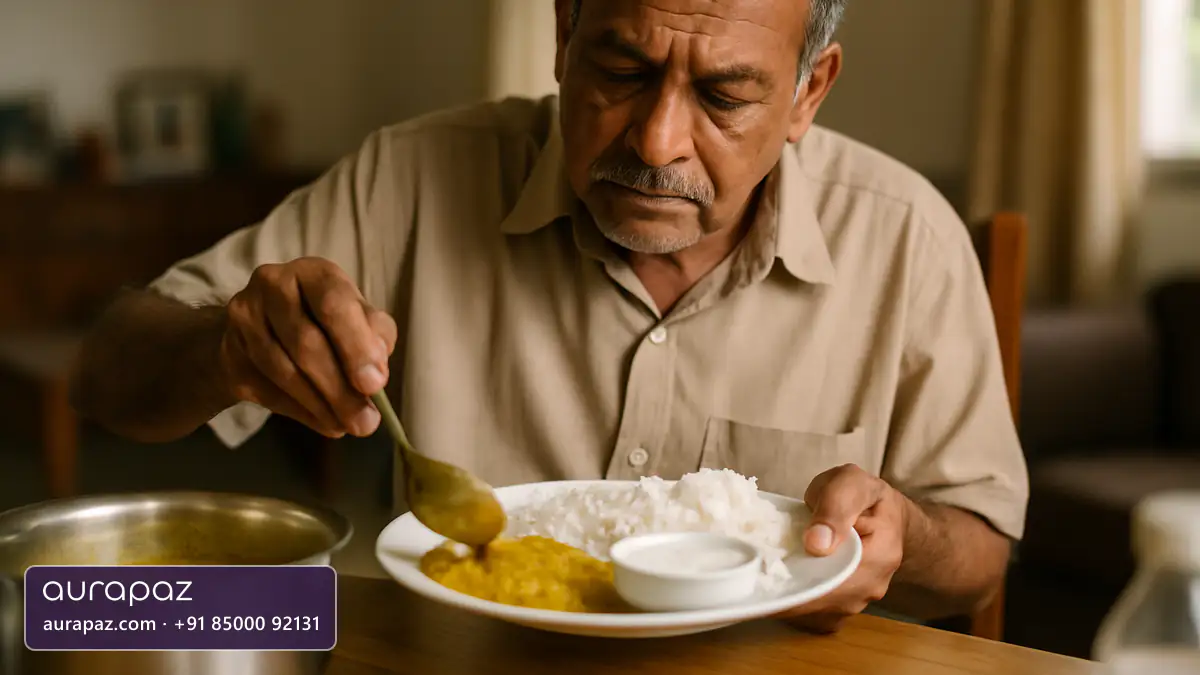
What an ordinary serving actually gives you
Protein figures are usually given per 100 g of raw food, but nobody eats 100 g of raw dal at a meal. Using the ICMR-NIN Indian Food Composition Tables (2017), here are realistic portions, with pulses weighed dry:
- Dal: 30 g of raw toor dal gives about 6.5 g of protein; the same weight of moong dal, about 7.2 g.
- Rajma and kala chana: 30 g dry gives about 6.0 g and 5.6 g.
- Soybeans: 30 g dry gives about 10.7 g, the most of any pulse. Soya chunks are a processed, more concentrated form, so check the pack for their figure.
- Paneer: 50 g gives about 9.4 g. Make sure it is real paneer, because analogue paneer can replace milk fat or milk protein with cheaper ingredients.
- Milk and curd: a 200 ml glass of cow’s milk gives about 6.5 g. A 150 g bowl of curd gives about 5 g (curd is not listed in the Indian tables, so this uses the USDA value for plain whole-milk yoghurt).
- Egg: one boiled egg gives about 6.7 g.
- Fish and chicken: 100 g of raw rohu gives about 19.7 g; 100 g of raw skinless chicken breast, about 21.8 g.
- Peanuts: a 25 g handful gives about 5.9 g.
- Cereals count too: two rotis made from 60 g of atta give about 6.3 g, and 60 g of raw rice about 4.8 g.
Most vegetarian servings land at 5 to 7 g, so one katori of dal at lunch does not carry the day. Two protein foods per meal, such as dal with curd or rajma with raita, is what moves the total. Non-vegetarians can swap part of their pulses for fish, chicken or eggs, as ICMR-NIN suggests.

Protein quality, and why dal-chawal works
Your body builds proteins from 20 amino acids, nine of which must come from food. Protein quality describes how well a food supplies those nine and how much you digest; ICMR-NIN’s 2020 report adopted a newer measure of it, the Digestible Indispensable Amino Acid Score (DIAAS).
Milk, eggs, fish and meat supply all nine in good balance and are digested well. Plant proteins are a little less digestible, 70 to 85 per cent according to ICMR-NIN, and each group has a weak spot. Cereals are low in lysine but carry more of the sulphur-containing amino acids, methionine and cysteine. Pulses are the reverse.
That is why rice with dal, roti with rajma and idli with sambar work: each covers the other’s gap. ICMR-NIN suggests cereals and pulses in roughly a 3 to 1 ratio by raw weight, and notes that adding about 250 ml of milk a day lifts the quality further. They need not share a plate. The Academy of Nutrition and Dietetics puts it simply: protein from a variety of plant foods, eaten over the course of a day, supplies enough of every essential amino acid when you are eating enough food overall.
A simple check: if a meal is only cereal and vegetable, such as plain poha or aloo paratha, add curd, a handful of peanuts or some sprouts.
On vegetarian diets the commoner gaps are B12 and iron, covered in vitamin B12 deficiency in Indian women.
A vegetarian day that adds up
Here is one ordinary day for a 55 kg woman, worked out from the food tables above. Vegetables and salad are left out, so the true total is a little higher.
- Breakfast: two moong dal chillas made from 40 g of dal (9.6 g) and a 150 g bowl of curd (5.2 g). About 14.8 g.
- Lunch: two rotis from 60 g of atta (6.3 g) and rajma made from 30 g of dry beans (6.0 g). About 12.3 g.
- Evening: chai with 100 ml of milk (3.3 g) and a 25 g handful of roasted peanuts (5.9 g). About 9.2 g.
- Dinner: rice from 60 g raw (4.8 g), toor dal from 30 g raw (6.5 g) and 50 g of paneer in the sabzi (9.4 g). About 20.7 g.
That comes to about 57 g, comfortably above her RDA of 45.7 g and above the 55 g she would need at 1 g per kg. The key is a protein food at every meal, which hurried breakfasts and lunches often lack.

Is there really a 30 g limit per meal?
You may have heard that the body can only “absorb” 20 or 30 g of protein at a sitting. That is not how digestion works: a larger meal is absorbed more slowly, not lost. The real question is how much of one meal’s protein goes into building muscle, and that has nuance.
Earlier research suggested muscle building peaked at around 20 to 25 g of fast-digesting protein, and in one trial, trained men given four 20 g doses of whey after a workout made more muscle protein than with eight 10 g or two 40 g doses. But a 2023 study found that 100 g of protein after exercise produced a larger response lasting more than 12 hours, compared with 25 g. A 2018 review concluded that some of the extra protein in a large dose does go into tissue, and suggested about 0.4 g per kg per meal, over at least four meals, for people trying to build as much muscle as possible.
For everyday eating, spreading protein across meals is sensible, especially as you get older, but a protein-heavy dinner is not wasted.
Who should be careful
Kidney disease
If you have chronic kidney disease (CKD), please do not raise your protein on your own, whatever a reel or a new guideline says. The 2024 KDIGO kidney guideline suggests 0.8 g per kg a day for adults with CKD stages 3 to 5, and avoiding more than 1.3 g per kg in those at risk of getting worse. People on dialysis have different needs, which their kidney team sets. Reduced kidney function is common alongside long-standing diabetes and high blood pressure and is often not noticed, so if you have either, ask your doctor about a kidney check before you add protein.
For healthy kidneys the evidence is reassuring: a 2018 meta-analysis found no difference in kidney function changes between higher and normal protein diets.
Protein powders
ICMR-NIN is direct: protein powders are unnecessary for normal healthy life, and large amounts taken over long periods are not advisable. Powders also carry a contamination concern, covered in the heavy metals found in protein powders. If you have a gap you cannot close with food, for example after illness or with a very small appetite, talk to your doctor or a dietitian before choosing one. That matters even more if you have kidney or liver disease, are pregnant or breastfeeding, or take regular medicines.
PCOS, thyroid and other hormone claims
Protein is not a hormone treatment. The 2023 international PCOS guideline found no evidence that any one diet composition, high protein included, is better than another for weight, metabolic, hormonal, reproductive or psychological outcomes. Possible thyroid symptoms, such as tiredness, weight change or period changes, need a blood test and your doctor, not a protein target.
Myth vs Reality: protein
| What the trend says | What the science says |
|---|---|
| “The RDA is a starvation minimum. Everyone needs at least 1.6 g per kg.” | ICMR-NIN’s 0.83 g per kg covers nearly all healthy adults. Higher figures suit specific groups. |
| “Your body can only absorb 30 g of protein at a time.” | Absorption is not capped. A 2023 study found 100 g after exercise gave a bigger, longer muscle-building response than 25 g. |
| “Vegetarians cannot get complete protein.” | Cereals and pulses cover each other’s weak amino acids. A varied plant diet eaten over the day supplies all nine essential ones. |
| “More protein means more muscle.” | Not without strength training. In trials, gains in lean mass levelled off at about 1.6 g per kg a day. |
| “High protein damages healthy kidneys.” | A 2018 meta-analysis found no difference in kidney function changes in healthy adults. Kidney disease is different. |
| “A high protein diet fixes PCOS and thyroid problems.” | The 2023 PCOS guideline found no diet composition better than another. Thyroid symptoms need testing and medical care. |
| “You need a protein powder to meet your needs.” | ICMR-NIN says powders are unnecessary for normal healthy life. |
Key takeaways
- ICMR-NIN’s RDA for healthy adults is 0.83 g of protein per kg a day: about 46 g for a 55 kg woman and 54 g for a 65 kg man.
- Needs rise after 65 (at least 1.0 to 1.2 g per kg), with regular training (1.4 to 2.0 g per kg), and from the second trimester of pregnancy.
- Most vegetarian servings give 5 to 7 g, so aim for two protein foods at each meal.
- Cereal with pulse, plus some milk, gives good quality protein.
- If you have kidney disease, or diabetes or high blood pressure, ask your doctor before eating more protein.
References & Further Reading
- ICMR National Institute of Nutrition. A brief note on nutrient requirements for Indians, the Recommended Dietary Allowances (RDA) and the Estimated Average Requirements (EAR). 2020.
- ICMR National Institute of Nutrition. Dietary Guidelines for Indians. 2024.
- Longvah T, et al. ICMR National Institute of Nutrition. Indian Food Composition Tables. 2017.
- WHO, FAO and UNU. Protein and amino acid requirements in human nutrition: report of a joint FAO/WHO/UNU expert consultation. WHO Technical Report Series 935, 2007.
- Bauer J, et al. Evidence-based recommendations for optimal dietary protein intake in older people: a position paper from the PROT-AGE Study Group. Journal of the American Medical Directors Association, 2013; 14(8): 542 to 559.
- Deutz NE, et al. Protein intake and exercise for optimal muscle function with aging: recommendations from the ESPEN Expert Group. Clinical Nutrition, 2014; 33(6): 929 to 936.
- Jäger R, et al. International Society of Sports Nutrition position stand: protein and exercise. Journal of the International Society of Sports Nutrition, 2017; 14: 20.
- Morton RW, et al. A systematic review, meta-analysis and meta-regression of the effect of protein supplementation on resistance training-induced gains in muscle mass and strength in healthy adults. British Journal of Sports Medicine, 2018; 52(6): 376 to 384.
- Areta JL, et al. Timing and distribution of protein ingestion during prolonged recovery from resistance exercise alters myofibrillar protein synthesis. Journal of Physiology, 2013; 591(9): 2319 to 2331.
- Trommelen J, et al. The anabolic response to protein ingestion during recovery from exercise has no upper limit in magnitude and duration in vivo in humans. Cell Reports Medicine, 2023; 4(12): 101324.
- Schoenfeld BJ, Aragon AA. How much protein can the body use in a single meal for muscle-building? Implications for daily protein distribution. Journal of the International Society of Sports Nutrition, 2018; 15: 10.
- Young VR, Pellett PL. Plant proteins in relation to human protein and amino acid nutrition. American Journal of Clinical Nutrition, 1994; 59(5 Suppl): 1203S to 1212S.
- Melina V, Craig W, Levin S. Position of the Academy of Nutrition and Dietetics: vegetarian diets. Journal of the Academy of Nutrition and Dietetics, 2016; 116(12): 1970 to 1980.
- KDIGO CKD Work Group. KDIGO 2024 clinical practice guideline for the evaluation and management of chronic kidney disease. Kidney International, 2024; 105(4S): S117 to S314.
- Devries MC, et al. Changes in kidney function do not differ between healthy adults consuming higher- compared with lower- or normal-protein diets: a systematic review and meta-analysis. Journal of Nutrition, 2018; 148(11): 1760 to 1775.
- Teede HJ, et al. Recommendations from the 2023 international evidence-based guideline for the assessment and management of polycystic ovary syndrome. Journal of Clinical Endocrinology and Metabolism, 2023; 108(10): 2447 to 2469.
- Elsayed S, Nelson M. Dietary Guidelines for 2025 to 2030: recommendations from the USDA and HHS. American Family Physician, 2026; 114(1): 98 to 100.
- USDA Agricultural Research Service. FoodData Central: Yogurt, plain, whole milk (SR Legacy, FDC ID 171284).