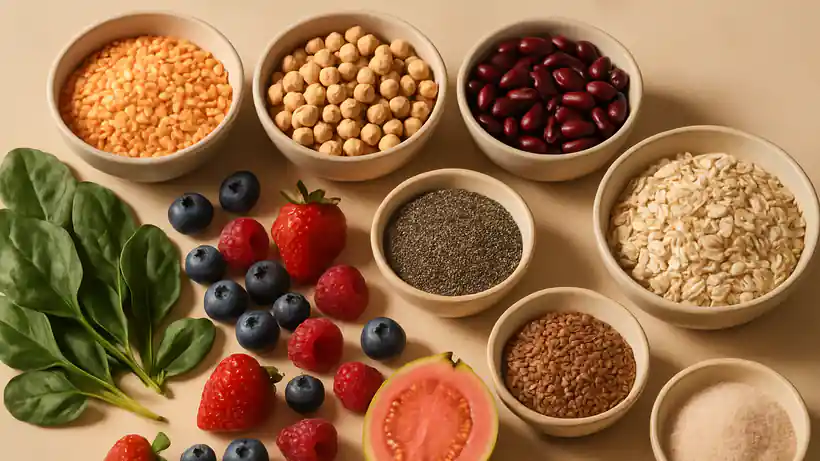
Fibre has spent decades as the dullest word in nutrition. Now it is the star of your feed. Under the hashtag fibermaxxing, people are stacking beans, oats, chia and greens onto every meal and posting the results, and the trend is tipped to overtake protein as the food obsession of 2026. For once, the internet is chasing something your body genuinely needs. Most of us eat far too little fibre. But like every wellness trend, fibermaxxing hides a catch: more is not always better, and doing it the wrong way can leave you bloated, gassy and worse off than when you started.
Here is the honest nutritionist’s take: what fibre actually does, how much you really need, the best foods to get it from (your Indian kitchen very much included), and how to ramp up without turning your gut into a balloon.

What Is Fibermaxxing?
Fibermaxxing simply means deliberately maximising the fibre in your day: adding a high-fibre food to every meal and snack so your total climbs well past what most people eat. The trend caught fire because it targets a real problem. Fibre is the one nutrient that almost nobody gets enough of.
Adults are advised to eat roughly 25 to 38 grams of fibre a day. Yet the average adult manages only about 10 to 15 grams, and only around one in ten people hit the target. So the instinct behind fibermaxxing, simply eat more fibre, is exactly right. The trouble is hidden in that second word: maxxing.
The Hidden Truth: Why Fibre Matters So Much
Fibre is the part of plant foods your body cannot digest. Because it passes through largely intact, it was long dismissed as mere filler. We now know it is one of the most powerful tools you have for long-term health, and much of that power comes down to your gut.
It feeds your gut bacteria
Fibre is the food your gut microbes actually live on. When they ferment it, they produce short-chain fatty acids that calm inflammation, strengthen the gut lining, and even influence your mood and immunity. This is why no amount of expensive probiotic powder replaces the simple act of feeding the bacteria you already have. It is the same principle behind healing your gut naturally.
Soluble and insoluble: two different jobs
There are two broad types of fibre, and you want both:
- Soluble fibre (oats, barley, psyllium or isabgol, apples, beans) dissolves into a gel that slows digestion, steadies blood sugar and helps lower cholesterol.
- Insoluble fibre (wheat bran, whole grains, vegetable skins, nuts and seeds) adds bulk and keeps everything moving, which is what eases constipation.
The long game
A diet with enough fibre is linked to a lower risk of obesity, heart disease, type 2 diabetes and colorectal cancer, plus better blood sugar and cholesterol. Very few single changes to your plate do this much good, which is exactly why fibre sits at the heart of an anti-inflammatory way of eating.
The instinct behind fibermaxxing is right: eat more fibre. The mistake is in the word “maxxing.”
How Much Fibre Do You Actually Need?
| Fibre per day | |
|---|---|
| Recommended for adults | 25 to 38 g |
| What the average adult eats | 10 to 15 g |
| Some fibermaxxers online | 70 to 80 g |
Look at that middle row. Most people are running at less than half of what they need, so doubling your intake is a genuinely worthy goal. Tripling it to 70 or 80 grams, as some fibermaxxers proudly post, is not. The aim is to close the gap, not to win a competition.
Fibermaxxing: Myth vs Reality
The trend gets the headline right but the fine print wrong. Here is how the loudest claims stack up against the evidence.
| What the trend says | What the science says |
|---|---|
| More fibre is always better | Benefits level off around 25 to 38 g a day; past roughly 40 g, bloating and gas climb |
| 70 to 80 g a day is a health flex | That much, especially added quickly, tends to backfire with wind, cramps and discomfort |
| Fibre powders do the job on their own | Whole plant foods win on variety and nutrients; isabgol helps but is not a full substitute |
| Load up all at once for fast results | Add about 5 g a week so your gut bacteria have time to adjust |
| Fibre is “nature’s Ozempic” | It genuinely curbs appetite and steadies blood sugar, but it is food, not a weight-loss drug |
Where Maxxing Backfires

Fibre’s benefits follow a curve, not a straight line. Push much past 40 grams a day, especially if you get there suddenly, and the trend starts to turn on you.
- Bloating, gas and cramps. Ramping up fibre overnight is like putting a balloon on an air pump. Your gut bacteria need weeks, not hours, to adjust.
- Constipation, the very thing you were fixing. Fibre works by absorbing water. Load up on it without drinking more, and it can set like cement instead of softening things.
- Poorer absorption of minerals. At very high intakes, fibre can bind minerals such as iron, zinc and calcium, which matters most for anyone already running low.
The Right Way to Add Fibre (Without the Bloat)
Done gently, more fibre is one of the kindest things you can do for your body. The method matters as much as the amount.
How to fibremaxx sensibly
- Go slow: add around 5 grams of extra fibre per week, not all at once.
- Drink more water as you go. Fibre needs fluid to do its job.
- Spread it across the day rather than one giant bowl of bran.
- Lean on whole foods first. Whole plants beat fibre powders, though isabgol has its place.
- Aim to optimise (reach 25 to 38 grams), not to maximise (70 to 80 grams).
The Best High-Fibre Foods (Indian Kitchen Included)

You do not need novelty powders or imported superfoods. Some of the highest-fibre foods on earth are already staples of an Indian kitchen. Here is roughly what common foods bring to the table.
| Food | Approx. fibre |
|---|---|
| Cooked dal or lentils (1 cup) | ~15 g |
| Rajma or chickpeas / chana (1 cup) | ~12 g |
| Chia or flax seeds / alsi (2 tbsp) | ~8 to 10 g |
| Psyllium husk / isabgol (1 tbsp) | ~5 g |
| Guava (1 medium) | ~5 g |
| Rolled oats (1 cup cooked) | ~4 g |
| Bajra or jowar roti (1) | ~3 to 4 g |
| Apple with skin, or an orange | ~3 to 4 g |
| Bhindi, methi or spinach (1 cup) | ~3 to 4 g |
Notice how quickly this adds up. A bowl of dal, a bajra roti, a guava and a spoon of soaked chia can carry you most of the way to a full day’s fibre, without a single supplement.
Fibre, Weight and “Nature’s Ozempic”
Part of why fibre is trending is its effect on appetite. Soluble fibre slows how fast your stomach empties and blunts blood-sugar spikes, so you stay full for longer and reach for snacks less often. That is exactly why oats, beans and psyllium keep appearing in conversations about natural GLP-1 support and Ozempic alternatives. Fibre is not a drug, but for steady, sustainable appetite control it is one of the most underrated tools on your plate.
Paired with enough protein, fibre is a genuine cornerstone of eating well, not a passing fad. Protein may have owned the last few years, but fibre deserves its moment, as long as we do not lose the plot and try to maximise it into misery.
Key takeaways
- Most people eat only 10 to 15 g of fibre a day against a target of 25 to 38 g, so eating more is genuinely smart.
- Fibre feeds your gut microbes, steadies blood sugar and cholesterol, and lowers long-term disease risk.
- Beyond roughly 40 g a day, or when increased too fast, fibre causes bloating, gas and even constipation.
- Add about 5 g per week, drink more water, and prefer whole foods over powders.
- Optimise, do not maximise. The goal is adequate fibre from varied plants, not a record-breaking number.
The Bottom Line
Fibermaxxing gets the big thing right: almost all of us need more fibre, and real, whole plant foods are the way to get it. Where it goes wrong is the maxxing mindset, chasing an ever-higher number until your gut rebels. Optimise, do not maximise. Reach 25 to 38 grams from a colourful variety of plants, build up slowly, drink your water, and let your gut do the rest.
If you are not sure where your own diet stands, or your stomach reacts badly to every change you try, that is worth a proper conversation rather than another trend.
Want a fibre and gut plan that actually suits you? Message Anusha on WhatsAppReferences & Further Reading
- NPR, “The fibermaxxing trend and its real health benefits”: npr.org
- Mayo Clinic Press, “Is fibermaxxing good for you?”: mcpress.mayoclinic.org
- Memorial Sloan Kettering Cancer Center, “Fibre and cancer risk”: mskcc.org