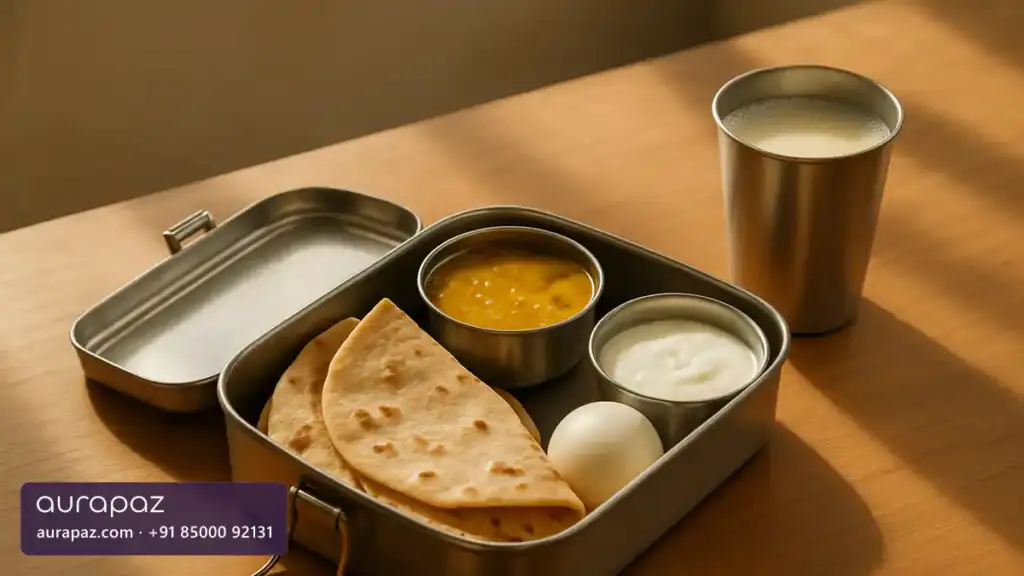
Walk into any Indian supermarket this year and you will find protein shouting at you from the children’s aisle. Protein biscuits, protein milk mixes, protein atta, protein bars shaped like cartoon characters. Parents come to me genuinely worried that their child is running on empty, usually after an advertisement or a reel has told them that Indian children are protein starved. The truth about protein for children is more interesting than the marketing, and considerably more useful. Most Indian children are not as short on protein as the packaging suggests. What many of them do have is a protein pattern problem: too little at breakfast, almost none in the lunchbox, and a sudden pile of it at dinner. That pattern is fixable with food you already cook.
What protein is actually doing in a growing body
In adults, protein largely maintains what already exists. In children it builds. Between birth and eighteen, protein supplies the raw material for new muscle, bone matrix, skin, hair, red blood cells, digestive enzymes and the antibodies that fight off every infection doing the rounds at school. It also underpins the growth hormone signalling that drives height.
This is why the requirement per kilogram of body weight is higher in childhood than in adulthood, and why brief shortfalls matter more. An adult who eats poorly for a fortnight recovers. A child in a growth spurt who eats poorly for months may lose ground that is harder to regain later.
If you want the full picture of what protein does, how quality is measured and how requirements are set across adulthood, I have written that up separately in The Truth About Protein. This article stays focused on children, where the numbers, the risks and the practical fixes are all different.
How much protein Indian children actually need
The Indian Council of Medical Research and the National Institute of Nutrition publish requirements calculated for Indian body weights and Indian diets, which is why I use them rather than American figures. Their 2020 recommended dietary allowances work out roughly as follows.
| Age group | Protein per day (approximate) |
|---|---|
| 1 to 3 years | 12 to 13 g |
| 4 to 6 years | 16 g |
| 7 to 9 years | 23 g |
| 10 to 12 years | 32 g (boys), 33 g (girls) |
| 13 to 15 years | 45 g (boys), 43 g (girls) |
| 16 to 18 years | 55 g (boys), 46 g (girls) |
Look at those numbers next to a normal Indian day and something becomes clear. A seven year old needs about 23 g. A glass of milk gives roughly 6 g. One katori of dal gives about 4 g. A katori of curd gives about 5 g. Two rotis give about 6 g. Add a boiled egg at 6 g and you have already crossed the line without buying a single fortified product.
An allowance of this kind is set to comfortably cover almost every healthy child, which means landing a little under on any given day is not a deficiency. Judge the pattern across a week, not one meal. A child recovering from illness, going through a fast growth phase, or training seriously in a sport will need more, and that is worth assessing individually rather than guessing.
Distribution, not the daily total, is the more useful thing to fix
When I actually add up food diaries for school age children, the daily total is frequently close to adequate. What is almost never adequate is how that protein is spread across the day.
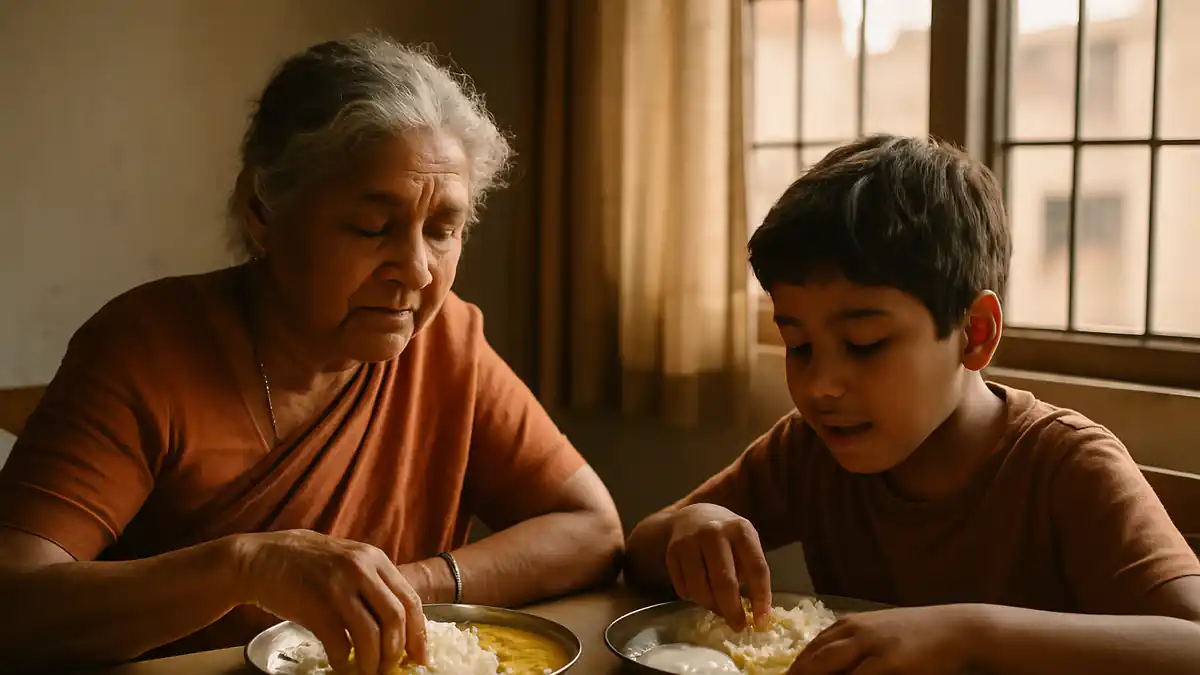
The typical pattern looks like this. Breakfast is poha, upma, bread and jam, or cereal with a little milk, delivering perhaps 4 g to 6 g. The lunchbox is two rotis with aloo sabzi, or plain rice with a token amount of curry, delivering another 5 g at best. Then dinner arrives with dal, sabzi, curd and sometimes egg or chicken, carrying 15 g or more in one sitting.
Does that pattern actually matter? I want to be careful here, because this is a point where confident claims outrun the evidence. The body does not store surplus protein the way it stores fat, and in adults there is reasonable evidence that spreading intake across meals supports muscle protein synthesis better than loading it into one. In children the research is thinner and not unanimous, partly because a growing body is in building mode almost continuously and may be less fussy about timing than an adult one.
So I would not promise that redistributing protein transforms your child’s growth. What I will say is that the practical case is strong regardless. A breakfast and a lunch carrying almost no protein are usually carrying very little else of value either, and they tend to leave children hungry, snacky and irritable by mid afternoon. Fixing those two meals reliably improves the whole day’s diet quality, whatever the amino acid timing turns out to contribute.
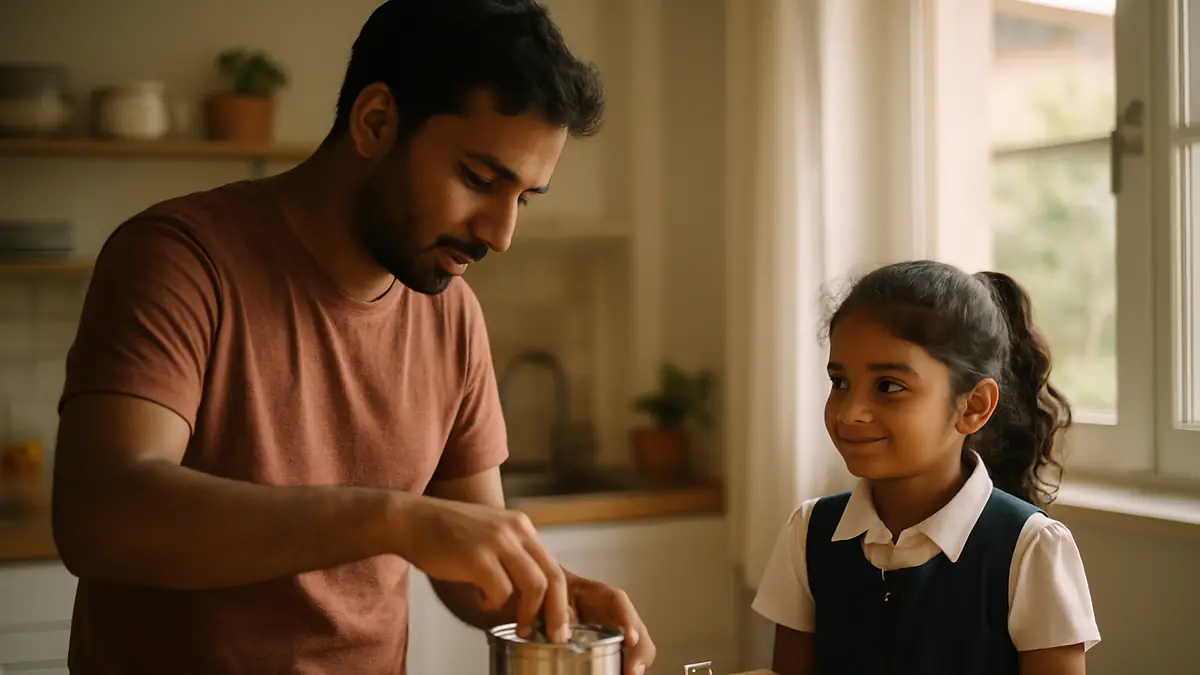
The lunchbox is the weakest link and also the easiest one to fix, because you control it completely and you pack it every single morning. This is where protein for children stops being a marketing question and becomes a practical one.
Myth versus reality: what parents keep being told
| What the trend says | What the science says |
|---|---|
| Indian children are all severely protein deficient. | Frank protein deficiency is uncommon in children eating enough total food. National survey data points to stunting, anaemia and micronutrient gaps as the bigger problems, and those are driven by overall diet quality, infection and poverty rather than protein alone. |
| Children need a protein supplement to grow properly. | Paediatric bodies are clear that healthy children eating a varied diet do not need protein powders. Supplements are formulated and dosed for adults, are not routinely tested in children, and displace real food that carries iron, zinc, calcium and fibre alongside its protein. |
| High protein damages children’s kidneys. | There is no evidence that normal dietary protein harms kidneys in children with healthy kidney function. This caution genuinely applies to children with existing kidney disease, who need specialist guidance. |
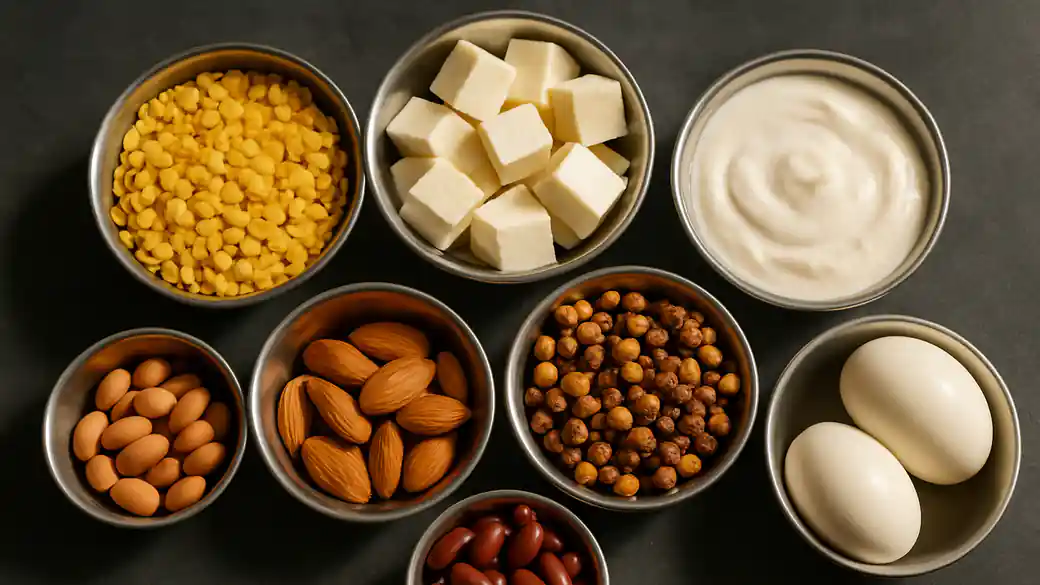
| Vegetarian children cannot get enough. | They can, comfortably, from dal, curd, paneer, milk, chana, rajma, peanuts and eggs where eaten. The genuine watch points on Indian vegetarian diets are vitamin B12, iron and total energy, not protein quantity. |
| Milk alone covers a child’s protein needs. | Milk is excellent but not sufficient alone, and very high milk intake in toddlers is a well documented cause of iron deficiency because it displaces iron rich foods and can irritate the gut lining. |
| More protein means a taller child. | Height is driven by genetics, total energy, sleep, infection load and overall nutrition. Once requirements are met, adding more protein does not add centimetres. |
Building a lunchbox that actually carries protein
You do not need new recipes. You need to add one protein anchor to food you already make. Some combinations that work in a real Indian kitchen, with rough protein values:
- Curd rice with roasted peanuts and a boiled egg: about 13 g to 14 g.
- Two besan or moong dal chillas with curd: about 12 g.
- Paneer paratha with a small bowl of curd: about 12 g to 14 g.
- Rajma or chana pulao with curd: about 11 g to 13 g.
- Idli or dosa with sambar plus a boiled egg on the side: about 12 g.
- Two rotis with an egg bhurji or paneer bhurji filling: about 13 g.
Compare any of these to two rotis with aloo sabzi at roughly 5 g and you can see the size of the swing. You have not added a supplement, an imported ingredient or an extra half hour of cooking. You have replaced a starch-only filling with one that carries protein.
Keep a small container of roasted chana, peanuts or soaked almonds in the kitchen and add a small fistful (roughly 25 g) to the box every morning. It takes five seconds and adds about 5 g to 7 g. A single spoon is closer to 2 g or 3 g, so make it a handful. For children with a nut allergy or in a nut free school, roasted chana or bhuna moong does the same job.
Vegetarian children and the quality question
Plant proteins differ from animal proteins in their amino acid balance and in how much of that protein the body absorbs. Cereals run short on lysine. Pulses run short on methionine. Eaten together across the day, as dal with rice or rajma with roti, they cover each other well. This is not a trick of timing that requires the two to be on the same plate at the same moment, and older advice insisting on that has been superseded.
There are two adjustments worth making for a fully vegetarian child. The first is quantity, because plant proteins are somewhat less digestible, so a slightly larger portion of dal or pulses does the work of a smaller portion of egg or dairy. The second is soaking, sprouting or fermenting pulses and grains where you can. Idli, dosa, dhokla and sprouted moong all reduce the phytates that block mineral absorption, which improves how much iron and zinc your child actually takes up alongside the protein.
The genuine risk on a vegetarian Indian diet is not protein. It is vitamin B12, which plants do not supply in usable amounts, and iron. I have covered why this hits Indian families so hard in Vitamin B12 Deficiency in Indian Women, and the same mechanisms apply to their children. If your child is vegetarian and tired, pale or struggling to concentrate, B12 and iron are far more likely culprits than protein.
Absorption also depends on gut health. A child with ongoing loose motions, bloating or repeated infections will not absorb well no matter how good the plate looks, which is worth reading about in How to Heal Your Gut Naturally.
Do children need protein powder?
For the overwhelming majority, no. I say this as someone who assesses children’s diets for a living, and I can count on one hand the cases where a supplement was genuinely the right call.
Protein powders are formulated for adult body weights. Serving sizes of 25 g to 30 g of protein can represent more than a full day’s requirement for a seven year old in a single scoop. Many are sweetened, some contain caffeine or herbal extracts never tested in children, and supplement quality control in India remains inconsistent. Crucially, a scoop of powder replaces food that would have delivered iron, zinc, calcium, fibre and B vitamins as part of the package.
A child who refuses dal will not suddenly thrive on a powder that tastes of artificial chocolate. The refusal is the problem worth solving.
The narrow exceptions are real but uncommon: children with medically diagnosed faltering growth, those recovering from major surgery or serious illness, some children with significant food allergies or restrictive eating disorders, and adolescents in high volume competitive training. Every one of those situations needs a clinician who can calculate the actual gap. None of them is served by a tub bought because of an advertisement.
If your child is a genuinely difficult eater, the useful moves are behavioural rather than pharmaceutical. Serve the protein first when hunger is highest. Keep portions small enough not to intimidate. Offer a refused food again without pressure, because acceptance often takes many exposures. Eat the same food yourself at the same table. Habits set early, which is why the groundwork laid during the first year of solid food pays off for years afterwards.
Signs of a genuine shortfall
Real protein inadequacy in a child rarely announces itself dramatically. It shows up as a pattern over months rather than a single symptom, and it usually travels with other nutritional gaps.
- Height or weight drifting downwards across growth chart percentiles over six months or more
- Poor muscle tone, or visible loss of muscle bulk around the shoulders and thighs
- Infections that arrive constantly and clear slowly
- Hair thinning, easy breakage or noticeable loss of pigment
- Wounds and scrapes healing more slowly than they used to
- Persistent fatigue and poor concentration at school
- Swelling of the feet or abdomen, which is a late sign and needs prompt medical attention
What to take away
- Requirements run from roughly 12 g a day at age two to 55 g for an older teenage boy, and ordinary Indian food meets them.
- The common failure is distribution, with protein absent at breakfast and lunch then concentrated at dinner.
- One protein anchor in the lunchbox, such as curd, egg, paneer, chana or peanuts, typically doubles that meal’s protein.
- Vegetarian diets supply enough protein. Watch B12 and iron instead.
- Healthy children do not need protein powder, and paediatric guidance does not recommend it.
- Track growth over months rather than judging by appetite on any single day.
If you are unsure whether your child is genuinely falling short, the answer is not a supplement bought on a hunch. It is a proper look at a few days of actual intake set against their growth chart. That assessment takes one consultation and usually ends with a parent relieved, holding a short list of small changes rather than a shopping list.
References & Further Reading
- Indian Council of Medical Research, National Institute of Nutrition. Nutrient Requirements for Indians: Recommended Dietary Allowances and Estimated Average Requirements, 2020. nin.res.in
- Indian Council of Medical Research. Revised Recommended Dietary Allowances for Indians (press release, 2020). icmr.gov.in
- World Health Organization, Food and Agriculture Organization, United Nations University. Protein and Amino Acid Requirements in Human Nutrition. WHO Technical Report Series 935. iris.who.int
- Ministry of Health and Family Welfare, Government of India, UNICEF and Population Council. Comprehensive National Nutrition Survey (CNNS) 2016 to 2018, National Report. nhm.gov.in
- American Academy of Pediatrics. Protein for the Teen Athlete. HealthyChildren.org. healthychildren.org
- American Academy of Pediatrics. Performance-Enhancing Sports Supplements: Information for Parents. HealthyChildren.org. healthychildren.org
- Harvard T.H. Chan School of Public Health. The Nutrition Source: Protein. hsph.harvard.edu
- National Health Service (UK). What to feed young children. nhs.uk