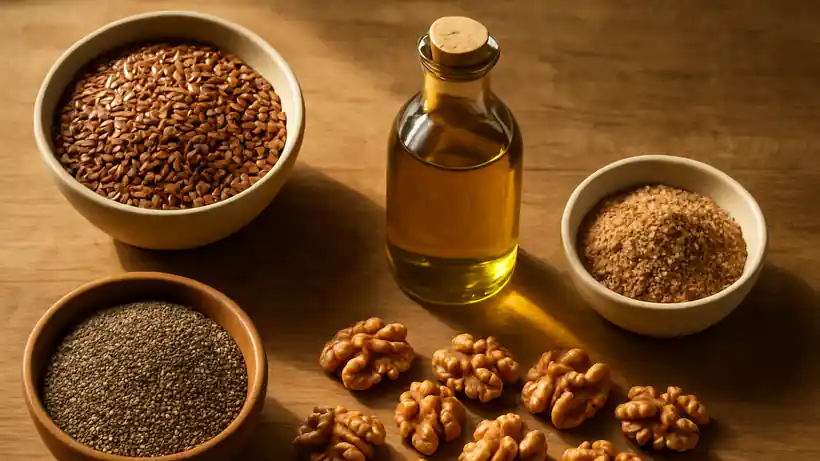
Omega-3 has quietly become one of the fastest rising search terms in nutrition. Most of the advice that follows is comforting and incomplete: eat flaxseeds, chia and walnuts, and you are sorted. If you are vegetarian, and especially if you are Indian and vegetarian, that advice skips over the single most important detail. There is a real gap between the omega-3 you eat from plants and the omega-3 your brain and heart actually use, and almost nobody explains it. It is not a reason to panic, and you certainly do not need to start eating fish. But it is worth understanding properly, because the fix is simple once you see the problem.
Three Different Things Called Omega-3
This is where the confusion starts. “Omega-3” is not one nutrient, it is a family, and the members are not interchangeable.
- ALA (alpha-linolenic acid): the plant form. Found in flaxseeds, chia, walnuts, hemp and mustard oil. This is the one vegetarian diets supply well.
- EPA (eicosapentaenoic acid): the form most linked to inflammation and heart health.
- DHA (docosahexaenoic acid): a structural building block of your brain and the retina of your eye. Especially important in pregnancy, infancy and older age.
EPA and DHA are the two doing most of the work your body actually needs. They are found in oily fish, which is exactly why vegetarian advice tends to go quiet at this point and change the subject back to flaxseed.
The Conversion Problem Nobody Mentions
Here is the part the standard advice glosses over. Your body can convert ALA into EPA and DHA, so technically plant sources can cover you. The trouble is how badly that conversion runs.
Typical figures are that less than ten percent of ALA converts to EPA, and less than five percent converts to DHA. In practice the DHA figure is often far lower still. So a generous tablespoon of ground flaxseed does not deliver anything like the equivalent amount of DHA to your brain. It delivers a lot of ALA and a small trickle of what you were actually after.
Conversion is also worse in some people than others. It tends to be lower in men than women, it declines with age, and it is reduced by a diet heavy in omega-6.
Omega-3 for Vegetarians: Myth vs Reality
| What the trend says | What the science says |
|---|---|
| Flaxseeds and walnuts cover all your omega-3 needs | They cover ALA well. Conversion to EPA is under ten percent and to DHA under five percent, so the forms your brain uses stay low |
| Vegetarians simply cannot get enough omega-3 | Not true. Algae oil supplies EPA and DHA directly, from the same source fish get theirs from |
| You must eat fish or take fish oil | Fish get their omega-3 by eating algae. Going to the algae directly works and skips the fish entirely |
| All omega-3 supplements are basically the same | A flaxseed oil capsule gives ALA only. Only algae oil or fish oil provides EPA and DHA |
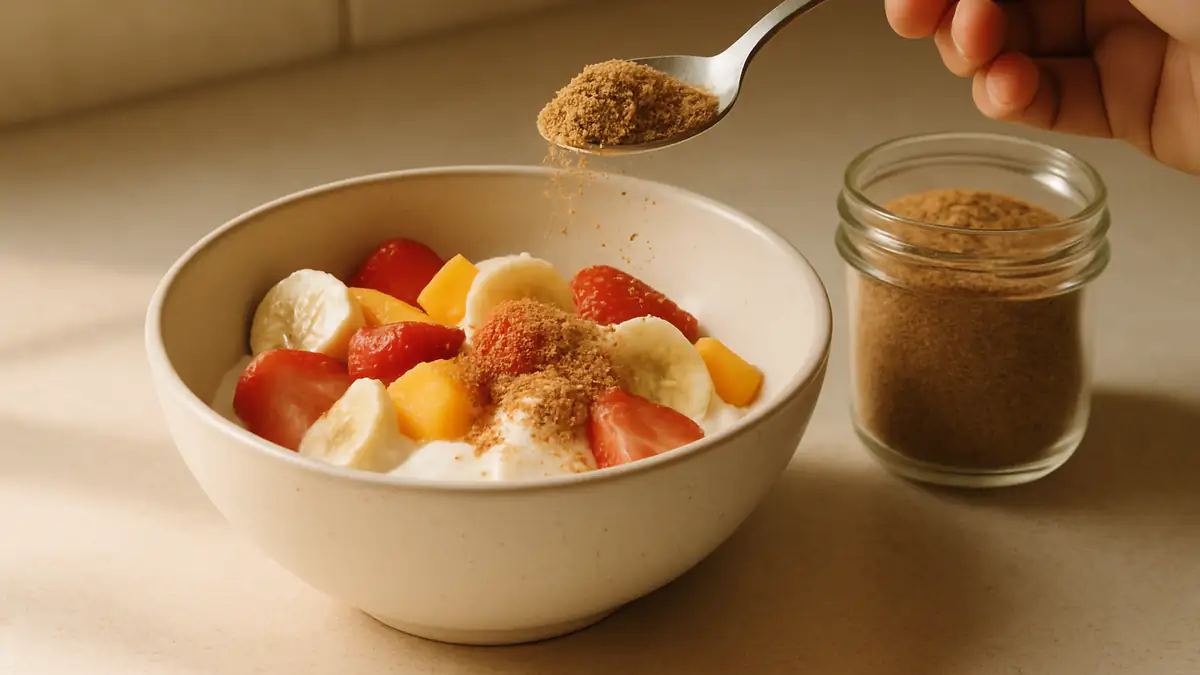
| Whole flaxseeds sprinkled on food are fine | Whole seeds mostly pass through undigested. They must be ground, and stored in the fridge once they are |
| More omega-6 vegetable oil is harmless here | A very high omega-6 intake competes for the same enzymes and further reduces the little conversion you get |
Why the Indian Vegetarian Plate Makes This Harder
Two things stack up in the same direction here, which is why I think this deserves attention rather than a shrug.
First, a large share of the population eats little or no fish, so the direct sources of EPA and DHA are simply absent from the plate. Second, Indian cooking leans heavily on omega-6 rich oils such as sunflower, soybean and corn. Those oils are not the villains the internet claims, as I explained in the piece on seed oils, but there is one legitimate point buried in that debate and this is it. Omega-6 and omega-3 compete for the same conversion enzymes. Flood the system with omega-6 and the already poor conversion of ALA gets poorer.
The answer is not to fear cooking oil. It is to make sure omega-3 actually appears in your diet, and to keep the balance less lopsided. This is the same reasoning behind a genuinely anti-inflammatory way of eating, which is about the overall pattern rather than any single ingredient.
Vegetarians are rarely short of omega-3 in the technical sense. They are usually short of the two forms that matter most.
The Vegetarian Sources That Actually Work
Practical, and available in any Indian kitchen or chemist.
| Source | Provides | How to use it |
|---|---|---|
| Ground flaxseed (alsi) | ALA, the richest plant source | One tablespoon daily, ground, in curd, dal, roti dough or a smoothie |
| Chia seeds | ALA plus fibre | Soaked in water, curd or milk. No need to grind |
| Walnuts (akhrot) | ALA | A small handful, around five halves, as a snack |
| Mustard oil (sarson) | ALA, unusually good for a cooking oil | Everyday cooking, as in much of eastern and northern India |
| Hemp seeds | ALA with a good omega balance | Sprinkled over salads or curd |
| Algae oil | EPA and DHA directly | A supplement, and the only vegetarian source of the active forms |
| Eggs (if you eat them) | Small amounts of DHA, more in omega-3 enriched eggs | A useful top up for eggetarians |
Grinding and storing flaxseed properly
This small detail undoes a lot of good intentions. Whole flaxseeds have a tough outer shell that survives your digestive tract largely intact, so sprinkling them on top of a salad looks healthy and achieves very little. Grind them. A regular mixer or a coffee grinder does the job in seconds, and grinding a week’s worth at a time is perfectly practical.
The catch is that omega-3 fats are fragile. Once ground, flaxseed oxidises and turns rancid fairly quickly at room temperature, especially in an Indian summer. Keep the ground powder in an airtight jar in the fridge or freezer and use it within a couple of weeks. If it smells sharp, bitter or like old paint, throw it out. The same applies to flaxseed oil, which should never be used for cooking because heat destroys it.
What about fortified foods?
You will increasingly see omega-3 claims on packaged milk, biscuits, atta and cooking oils. Read these carefully. Most add small amounts of ALA, which you were probably getting anyway, rather than the EPA and DHA that are genuinely harder to obtain. Omega-3 enriched eggs are one of the more honest options, since hens fed flaxseed do deposit some DHA in the yolk. Otherwise, treat an omega-3 flash on a packet as marketing until the label shows you an actual EPA and DHA figure.
Algae Oil: The Option Most People Have Never Heard Of
If you take one practical thing from this article, make it this. There is a persistent belief that omega-3 supplements mean fish oil, and that vegetarians are therefore stuck with flaxseed. That is simply out of date.
Fish do not manufacture EPA and DHA. They accumulate it by eating microalgae. Algae oil supplements go straight to that original source, which means you get EPA and DHA directly, with no conversion problem, no fish, and no fishy aftertaste. A systematic review of intervention studies found that ALA from seed and nut oils, flaxseed oil included, did not raise DHA levels at all, while microalgal oil produced significant increases in blood DHA. That is the whole argument in one sentence.
If you buy one, look for a stated EPA and DHA content on the label rather than just a total omega-3 figure, and aim for something in the region of 250 to 500 mg of combined EPA and DHA daily. Keep it in the fridge, and skip anything that smells rancid.
How Much Do You Need?
Broad guidance rather than precise rules, because needs vary:
- ALA: roughly 1.1 to 1.6 grams a day, which one tablespoon of ground flaxseed covers.
- EPA and DHA combined: commonly suggested at around 250 to 500 mg a day for general health.
- Pregnancy and breastfeeding: DHA matters a great deal for the baby’s brain and eyes, and needs are higher. Please discuss this with your doctor rather than self prescribing.
Who Should Pay Extra Attention
Not everyone needs to act on this with equal urgency. I would think about it seriously if you are pregnant, planning a pregnancy or breastfeeding; if you are vegan, since even eggs and dairy are off the table; if you are an older adult, given both the brain relevance and declining conversion; if you are raising vegetarian children through their main years of brain development; or if you are managing heart or inflammatory conditions.
It is also worth noting that vegetarian diets in India already carry a well documented gap in vitamin B12. Omega-3 is the second item on that same list, and both are easy to fix once you know to look.

The practical summary
- Plant foods give you ALA. Your body converts very little of it to EPA and almost no DHA.
- Have a tablespoon of ground flaxseed most days, and grind it fresh or refrigerate it.
- For EPA and DHA, algae oil is the vegetarian answer. No fish required.
- Do not fear cooking oil, but do not let omega-6 crowd everything out either.
- Pregnancy, vegan diets, children and older adults deserve the closest attention.
The Bottom Line
The vegetarian omega-3 story is not the alarming one some corners of the internet tell, and it is not the reassuring one that stops at flaxseed either. The truth is more useful than both. You are almost certainly getting plenty of ALA, and your body is converting very little of it into the EPA and DHA your brain and heart actually run on. Keep the flaxseed, chia and walnuts, because they are genuinely good foods. Then, if you fall into one of the higher need groups, add algae oil and close the gap properly. It is one of the tidier problems in nutrition: clearly identified, cheaply solved, and almost entirely overlooked.
If you are vegetarian and unsure whether you need a supplement, or you are pregnant and trying to work out what is genuinely necessary, that is worth going through properly rather than guessing.
Vegetarian and unsure about omega-3? Message Anusha on WhatsAppReferences & Further Reading
- National Institutes of Health, Office of Dietary Supplements, “Omega-3 Fatty Acids: Fact Sheet for Health Professionals”: NIH Office of Dietary Supplements
- Lane K et al., “Bioavailability and potential uses of vegetarian sources of omega-3 fatty acids: a review of the literature”: PubMed (PMID 24261532)
- “Can plant-based diets meet omega-3 needs? Experts weigh in”: The Week